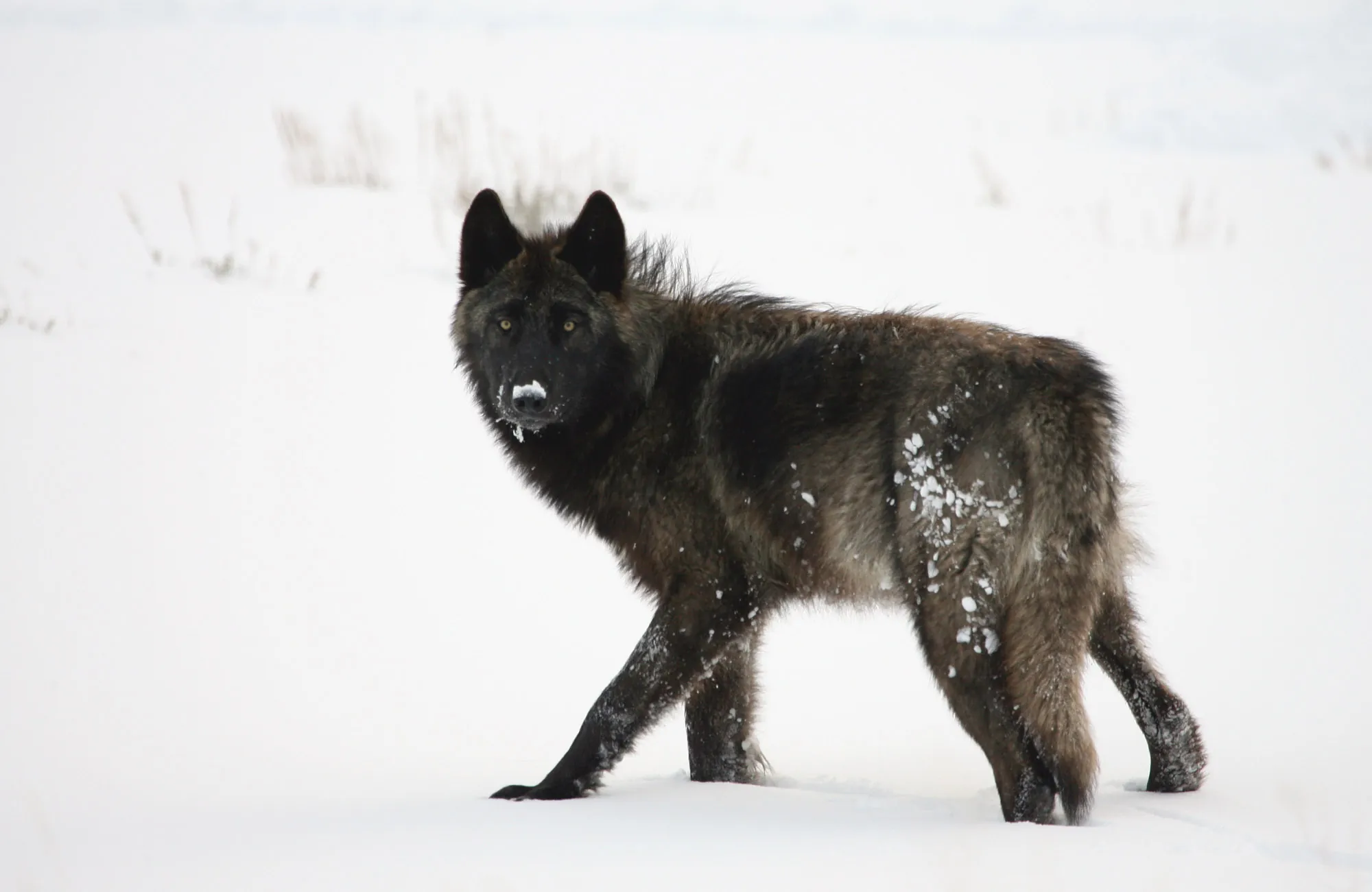
Yellowstone's Most Iconic Predator
Seeing a wild wolf in Yellowstone is one of the most thrilling wildlife experiences in North America. Since their reintroduction in 1995, Yellowstone's wolves have become a global symbol of wilderness restoration — and a powerful draw for visitors from around the world.
Today, approximately 100 wolves in about 10 packs roam the Greater Yellowstone Ecosystem. While sightings aren't guaranteed, knowing where to look, when to look, and what to bring dramatically increases your chances.
The Wolf Reintroduction Story
Wolves were systematically eliminated from Yellowstone by 1926 as part of government predator control programs. For nearly 70 years, the park's ecosystem functioned without its apex predator — and it showed.
In 1995 and 1996, 31 grey wolves from Canada were released in Yellowstone's Lamar Valley. What followed became one of the most celebrated conservation success stories in history — the "trophic cascade":
- Elk behavior changed — they stopped lingering in valleys, allowing willow and aspen to regenerate
- Beaver populations recovered as streamside vegetation returned
- Songbird species increased with restored riparian habitat
- Grizzly bears benefited from wolf-killed carcasses in spring
- Even the Yellowstone River changed course as stabilized banks reduced erosion
The Cascade Effect
The return of wolves to Yellowstone is the most famous example of a 'trophic cascade' in ecology. It demonstrated that top predators don't just kill prey — they reshape entire landscapes.
Best Wolf-Watching Locations
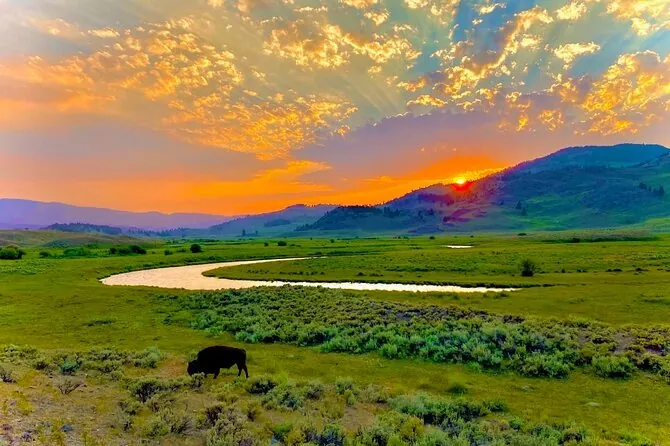
Lamar Valley
Prime territory • Multiple packs
The undisputed #1 wolf-watching location. Wide valley with long sightlines, multiple pack territories, and a community of dedicated wolf watchers.
Slough Creek
Den sites • Spring focus
Several packs have denned in the Slough Creek drainage. In April–May, pups emerge and adults hunt nearby.
Hayden Valley
Central park • Year-round
The Canyon Pack frequents Hayden Valley. Less crowded than Lamar for wolf watching.
Swan Lake Flat
Near Mammoth • Roadside
Wolves occasionally cross Swan Lake Flat between Mammoth and Norris. Easy roadside viewing when wolves are present.
Madison Valley
West side • Winter
In winter, wolves follow elk herds into the Madison Valley near the West Entrance.
Blacktail Deer Plateau
Northern Range • Transitional
Wolves move through this area between Mammoth and Tower. Open plateau allows long-range viewing.
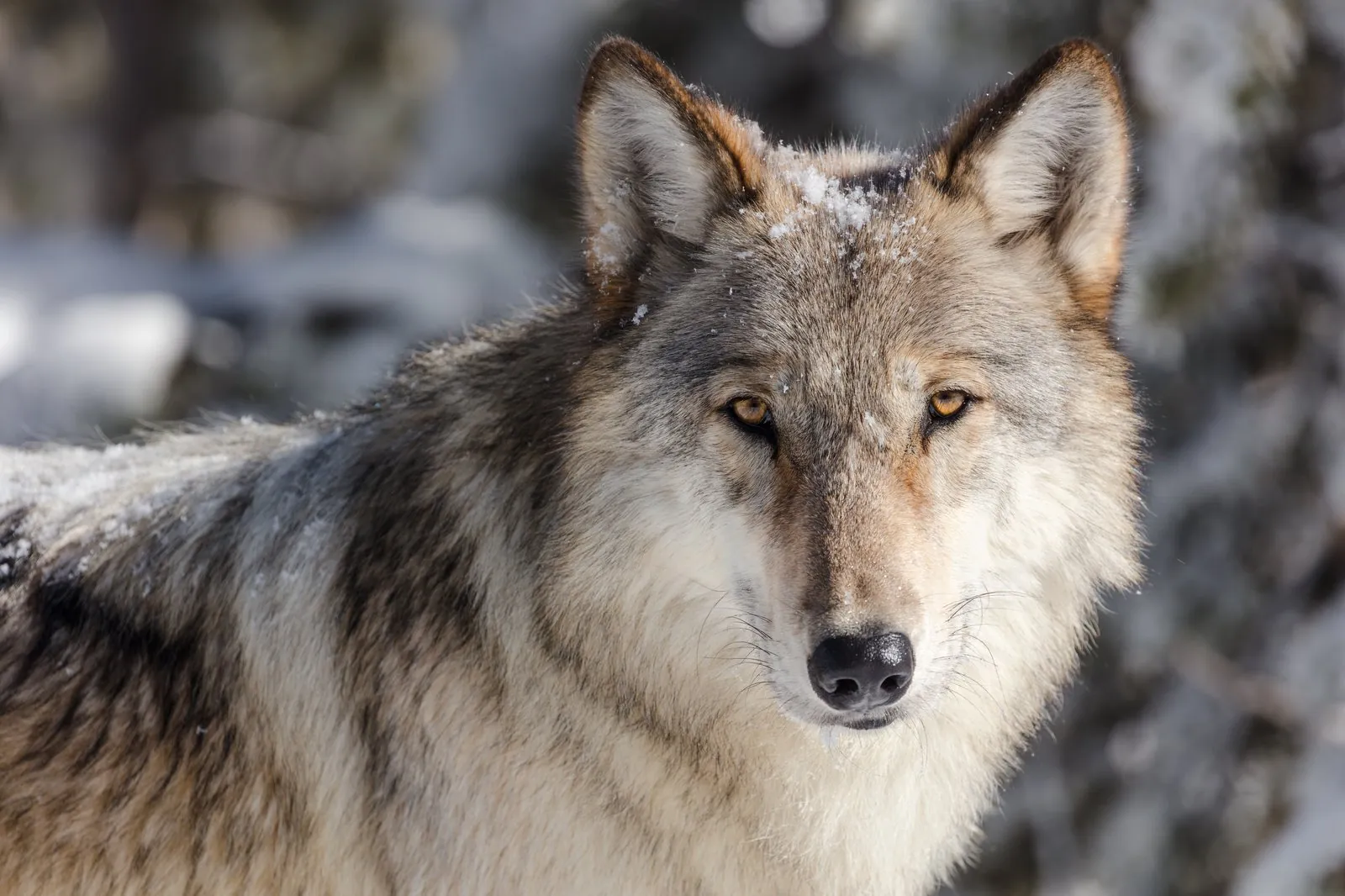
Known Wolf Packs (2025–2026)
- Junction Butte Pack — One of the most-watched packs in history. Territory in Lamar Valley and Slough Creek. 15–20 members.
- Rescue Creek Pack — Operates near Mammoth Hot Springs and the Blacktail Deer Plateau.
- Wapiti Lake Pack — Central Yellowstone pack in the Hayden Valley and Canyon area.
- Mollie's Pack — One of the oldest packs in the park. Territory in the Pelican Valley backcountry.
- 8 Mile Pack — Northern range pack sometimes visible in the Lamar Valley area.
Connect with Wolf Watchers
The best way to find wolves is to find the wolf watchers. Look for clusters of people with spotting scopes on tripods at Lamar Valley pullouts. They track wolves daily and are generous with their scopes and knowledge.
Seasonal Wolf-Watching Guide
| Season | Wolf Activity | Viewing Quality | Notes |
|---|---|---|---|
| Winter (Dec–Mar) | Pack hunts on elk herds, territorial howling | ★★★★★ | Best season. Dark fur on white snow. |
| Spring (Apr–May) | Denning, pup emergence, elk calving | ★★★★ | Pups visible at den sites. Exciting. |
| Summer (Jun–Aug) | Pups at rendezvous sites, dispersed | ★★ | Wolves move to higher elevations. Less reliable. |
| Fall (Sep–Nov) | Packs reuniting, elk rut, territorial | ★★★ | Improving odds as wolves return to valleys. |
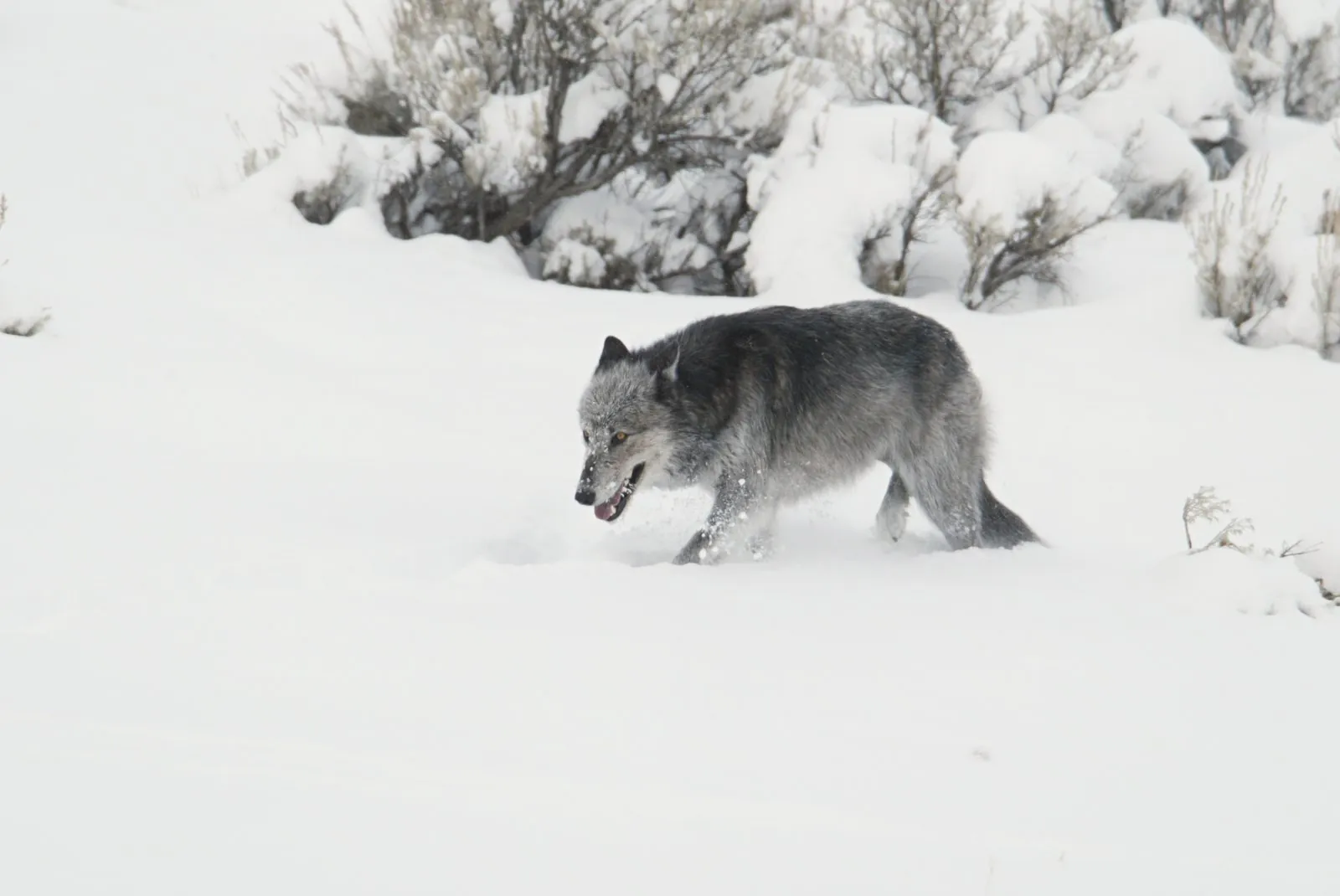
How to Spot Wolves
Essential Equipment
- Spotting scope (20–60x) on a tripod — absolutely essential for serious wolf watching
- Binoculars (10x42 minimum) — for scanning and initial detection
- 600mm+ telephoto lens for photography (wolves are almost always far away)
- Warm layers — you'll be standing still at dawn in cold conditions
- Patience — wolf watching means hours of scanning with occasional magic
Viewing Strategy
- Arrive at Lamar Valley before dawn — wolves are most active at first light
- Set up your scope at a pullout and systematically scan hillsides, ridgelines, and meadow edges
- Look for movement — a black or grey shape moving against the landscape
- Listen for howling — wolves howl most at dawn and dusk
- Watch for ravens and magpies — they follow wolf kills and can lead you to wolves
- Check with other wolf watchers — they'll tell you the last known location
Ethical Wolf Watching
- Maintain at least 100 yards (300 feet) from all wolves — this is NPS law
- Never follow or pursue wolves — if they change direction because of you, you're too close
- Stay on designated roads and pullouts — do not walk toward wolves across meadows
- Use your scope or binoculars from the road. The best wolf watchers never leave the pullout.
- Keep noise down — loud talking and engine revving disturb wolves
- Do not howl at wolves — human imitation can disrupt pack communication
- If wolves approach the road, stay in or near your vehicle
Why Distance Matters
Habituation — wolves losing their fear of humans — is the #1 threat to Yellowstone's wolf-watching experience. Every time you maintain proper distance, you're helping protect the wolves you came to see.
Frequently Asked Questions
Where is the best place to see wolves in Yellowstone?
Lamar Valley, without question. Arrive before dawn for the best chances.
What time of year is best for wolf watching?
Winter (December–March) is the peak season. Spring (April–May) is also excellent when pups emerge from dens.
How likely am I to see a wolf?
With the right strategy (dawn in Lamar Valley, spotting scope, talking to wolf watchers), your chances are good but not guaranteed. Budget at least 2–3 mornings.
Can I see wolves from Island Park?
Wolf sightings occasionally occur in the Island Park area, but for reliable wolf watching, drive to Lamar Valley — about 2 hours from our cabin.