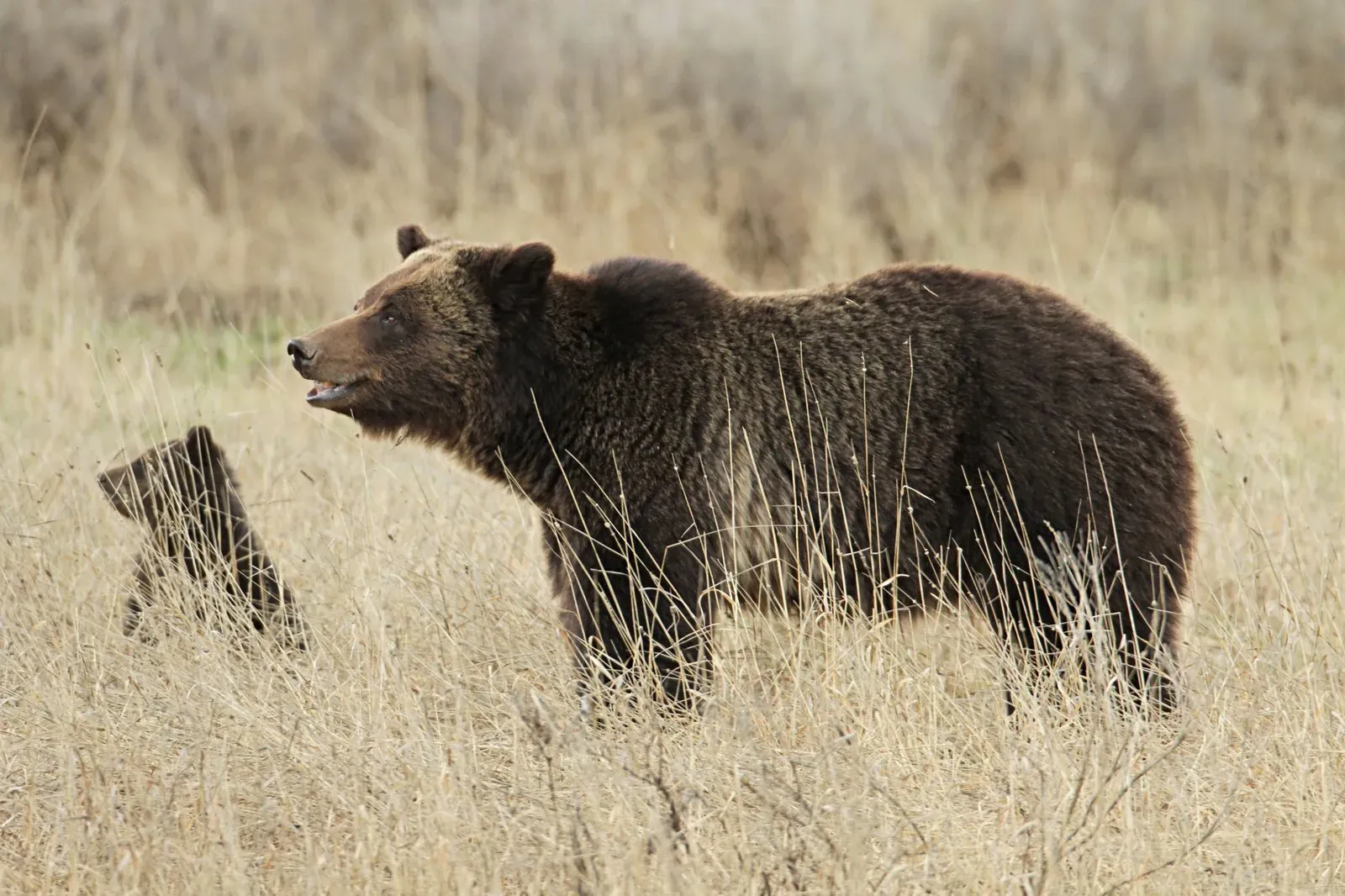
Bears Are Yellowstone's Most Sought-After Wildlife
Yellowstone is home to roughly 700+ grizzly bears and an estimated 500–600 black bears — one of the densest bear populations in the lower 48 states. For many visitors, seeing a bear in the wild is the highlight of their entire trip.
But bears aren't guaranteed. They range widely, change habits with the seasons, and can be elusive even in their core habitat. This guide gives you the best strategies for finding both grizzly and black bears — where to look, when to look, and how to watch safely and ethically.
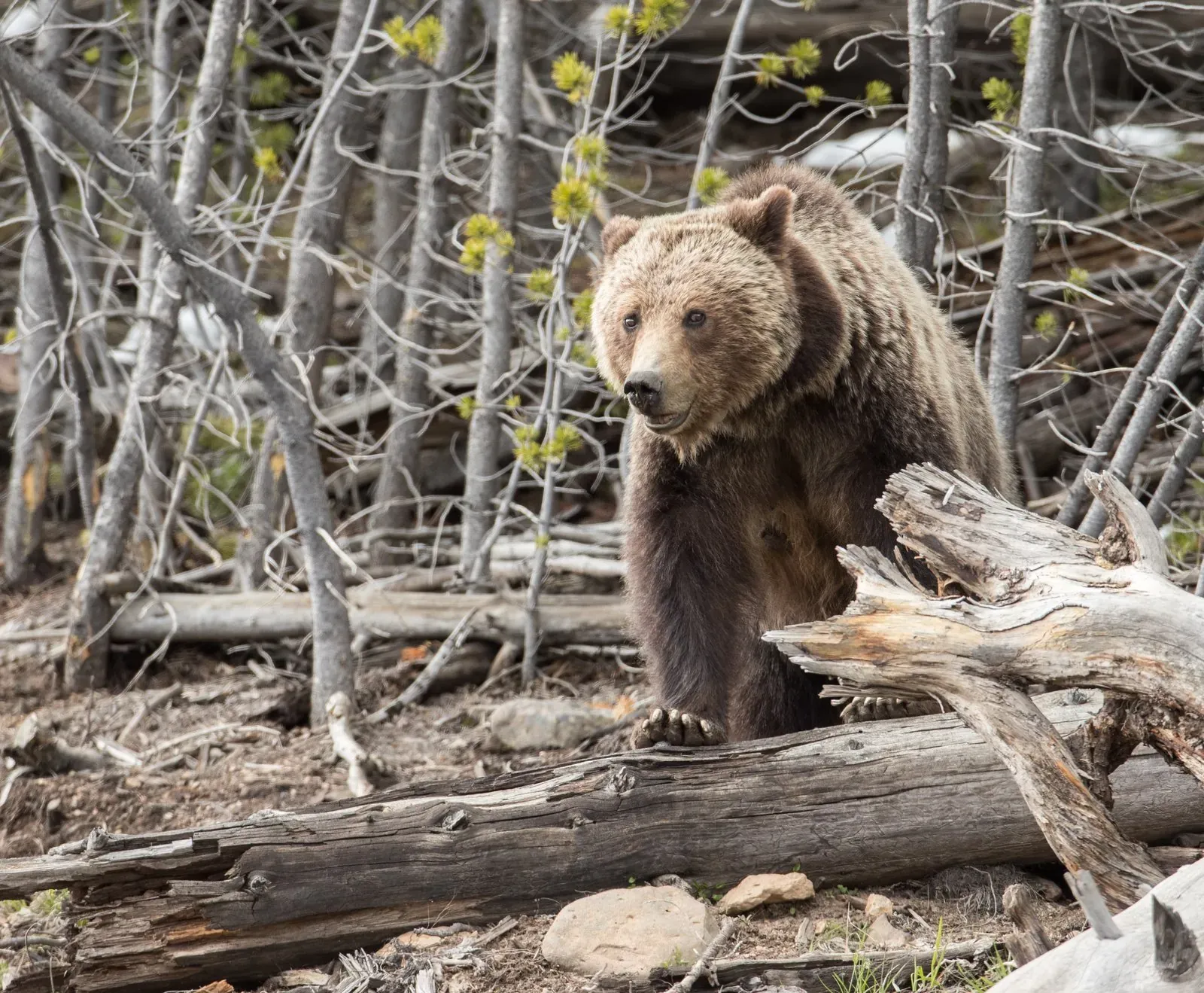
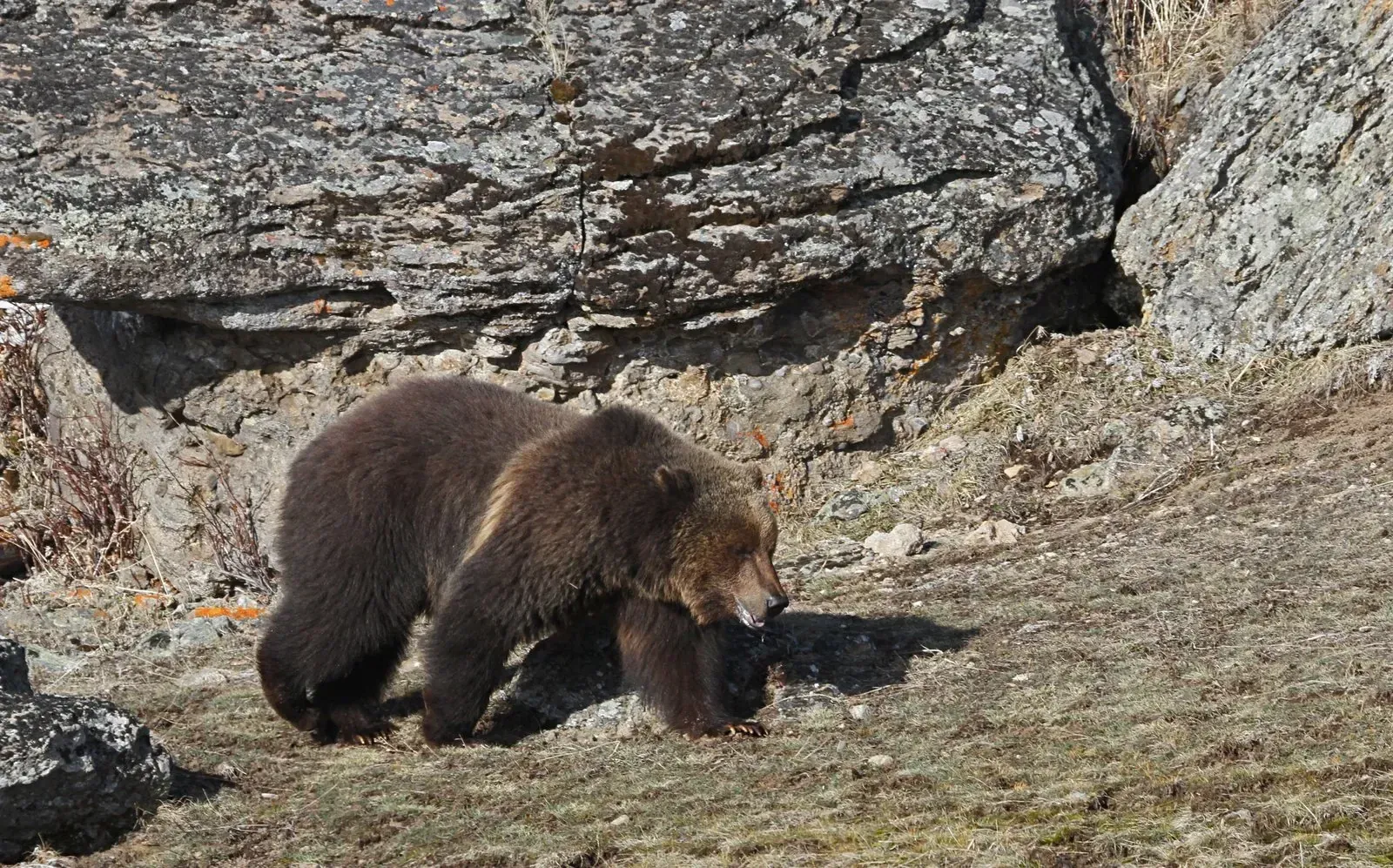
Grizzly Bear vs. Black Bear: How to Tell Them Apart
| Feature | Grizzly Bear | Black Bear |
|---|---|---|
| Shoulder Hump | Yes — prominent | No |
| Face Profile | Concave/dished | Straight |
| Ears | Short, rounded | Taller, pointed |
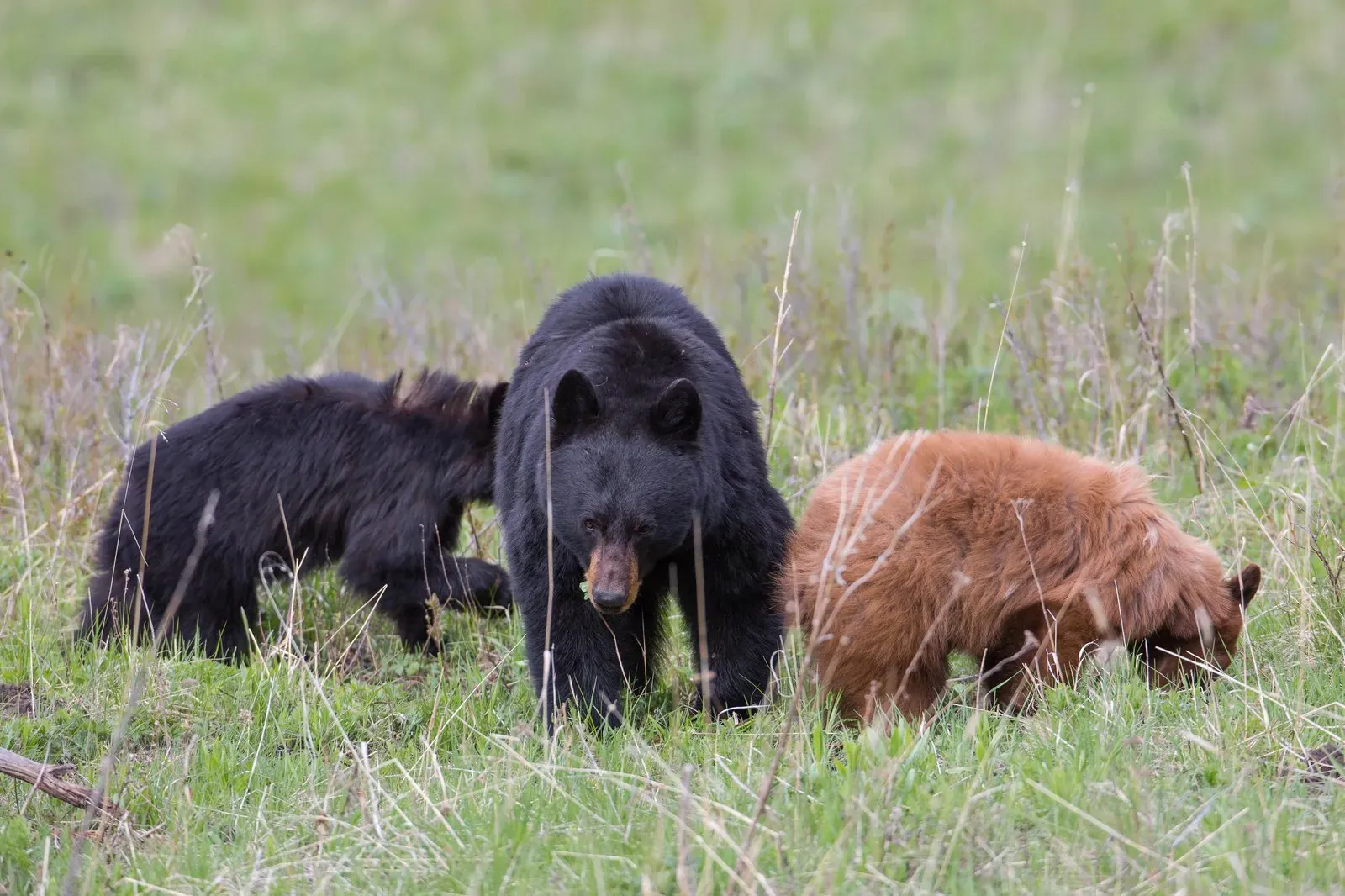
| Color | Blonde to dark brown | Black, brown, cinnamon |
| Size (adult male) | 300–700 lbs | 200–400 lbs |
| Claws | Long (2–4"), light-colored | Short (1–2"), dark |
Color Is Misleading
Don't rely on color alone. "Black" bears can be brown, cinnamon, or even blonde. "Grizzly" bears can be very dark. Look for the shoulder hump and face profile instead.
Best Bear-Viewing Locations in Yellowstone
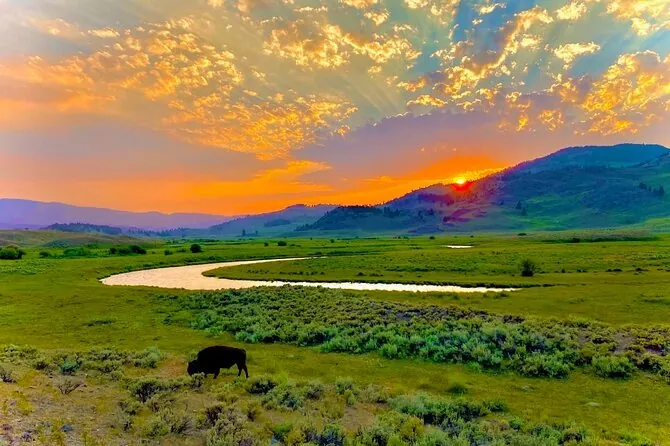
Lamar Valley
Grizzly & Black Bear
Best season: Spring (Apr–Jun), Fall (Sep–Oct)
The 'Serengeti of North America.' Scan hillsides at dawn and dusk. Bears dig for rodents on open slopes. Often see sows with cubs in spring.
Hayden Valley
Grizzly Bear
Best season: Spring & Fall
Wide valley along the Yellowstone River. Grizzlies hunt elk calves in spring. Less accessible in winter. Great from pullouts.
Dunraven Pass / Mt. Washburn
Grizzly Bear
Best season: June–July
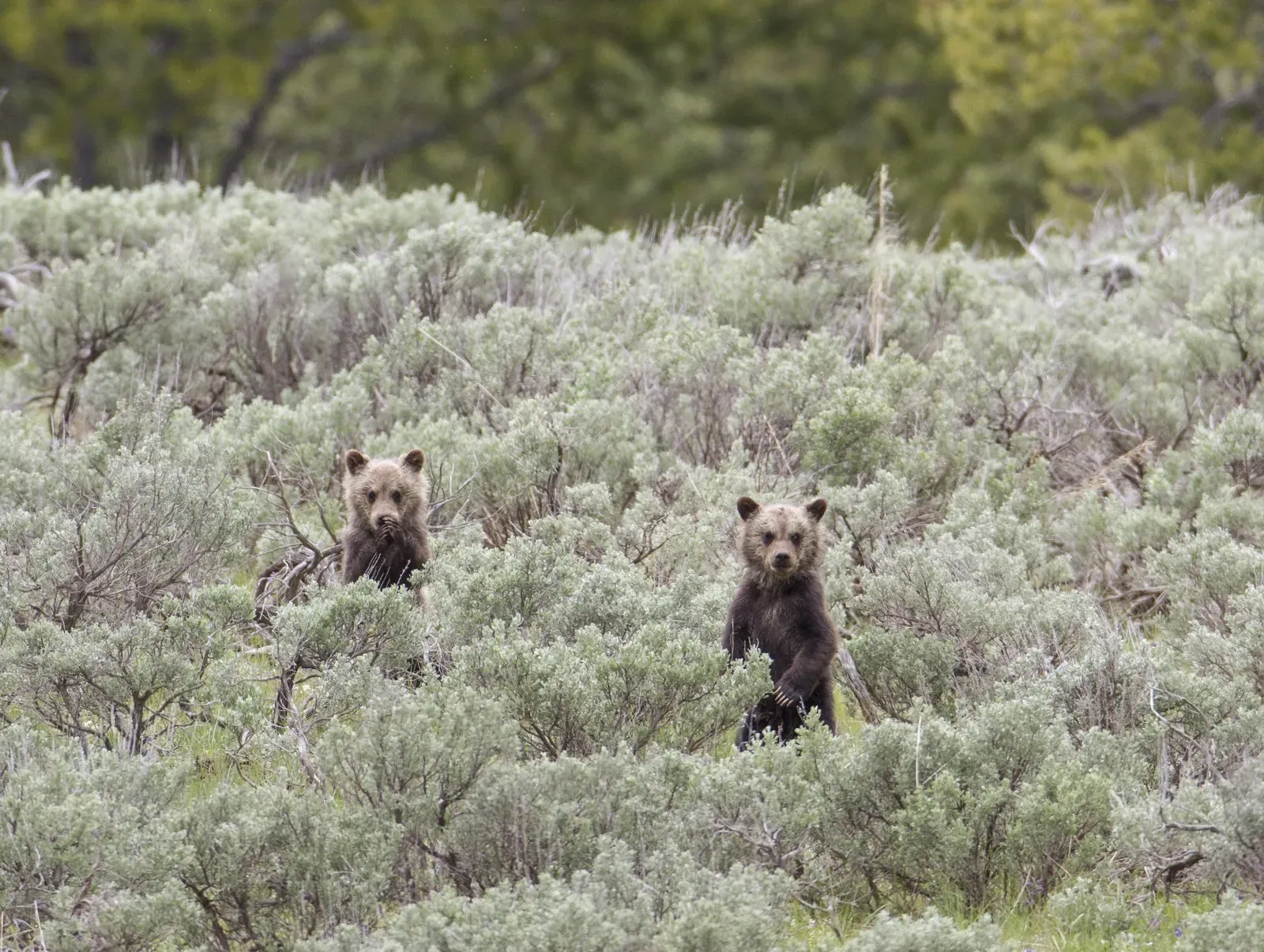
High-elevation meadows. Grizzly sows with new cubs emerge here after hibernation. One of the most reliable spring grizzly spots.
Tower-Roosevelt
Black Bear
Best season: May–June
The Tower Junction to Mammoth road is the park's most consistent black bear corridor. Bears forage in open meadows along the road.
Fishing Bridge / Sedge Bay
Grizzly Bear
Best season: June–August
Grizzlies fish for cutthroat trout at the Yellowstone Lake inlet. Sedge Bay is a reliable roadside viewing spot.
Swan Lake Flat
Grizzly & Black Bear
Best season: Spring
Open meadow between Mammoth and Norris. Bears seen crossing the flat, especially early morning. Also great for elk.
Black Bear Hotspots
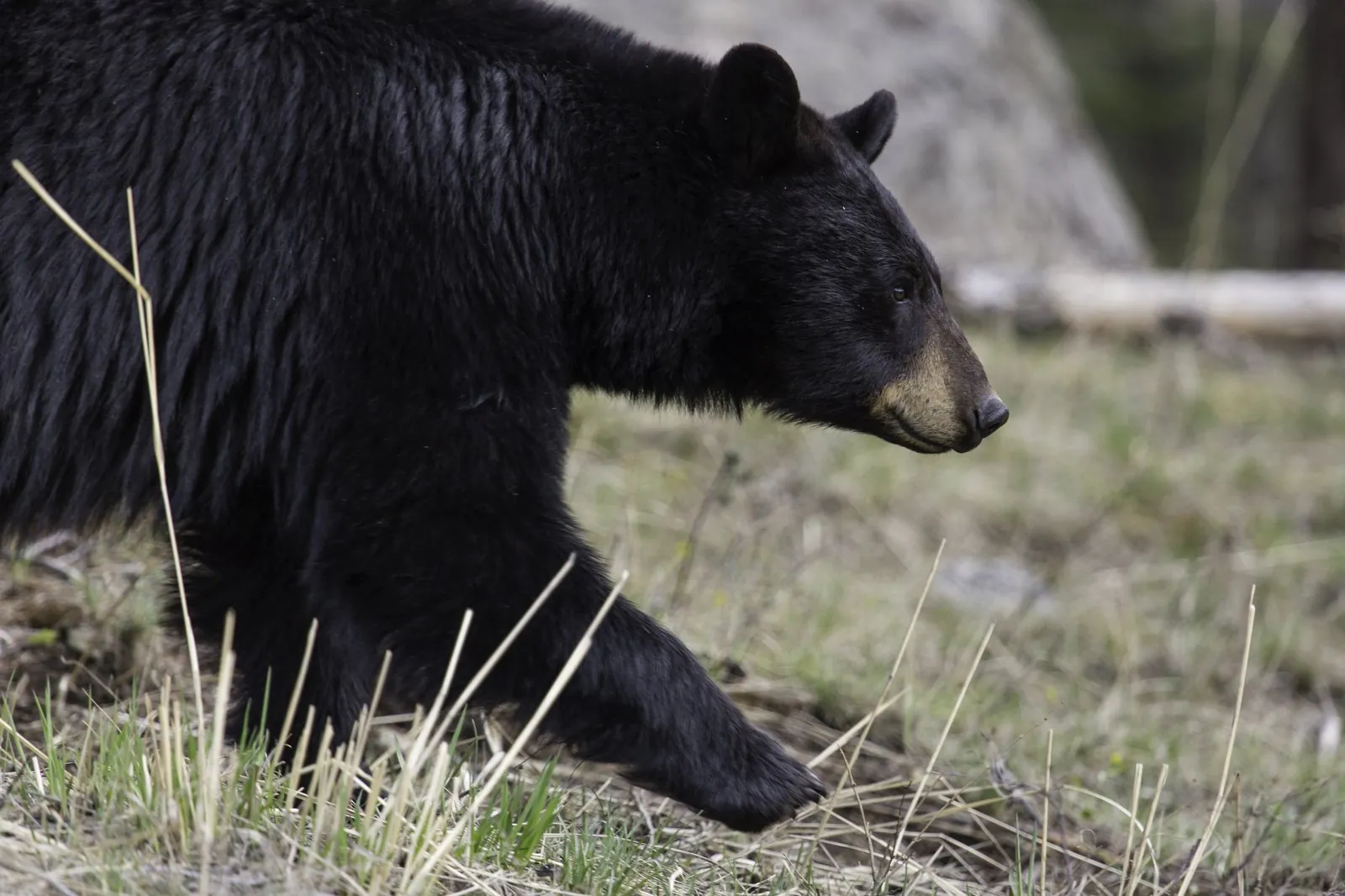
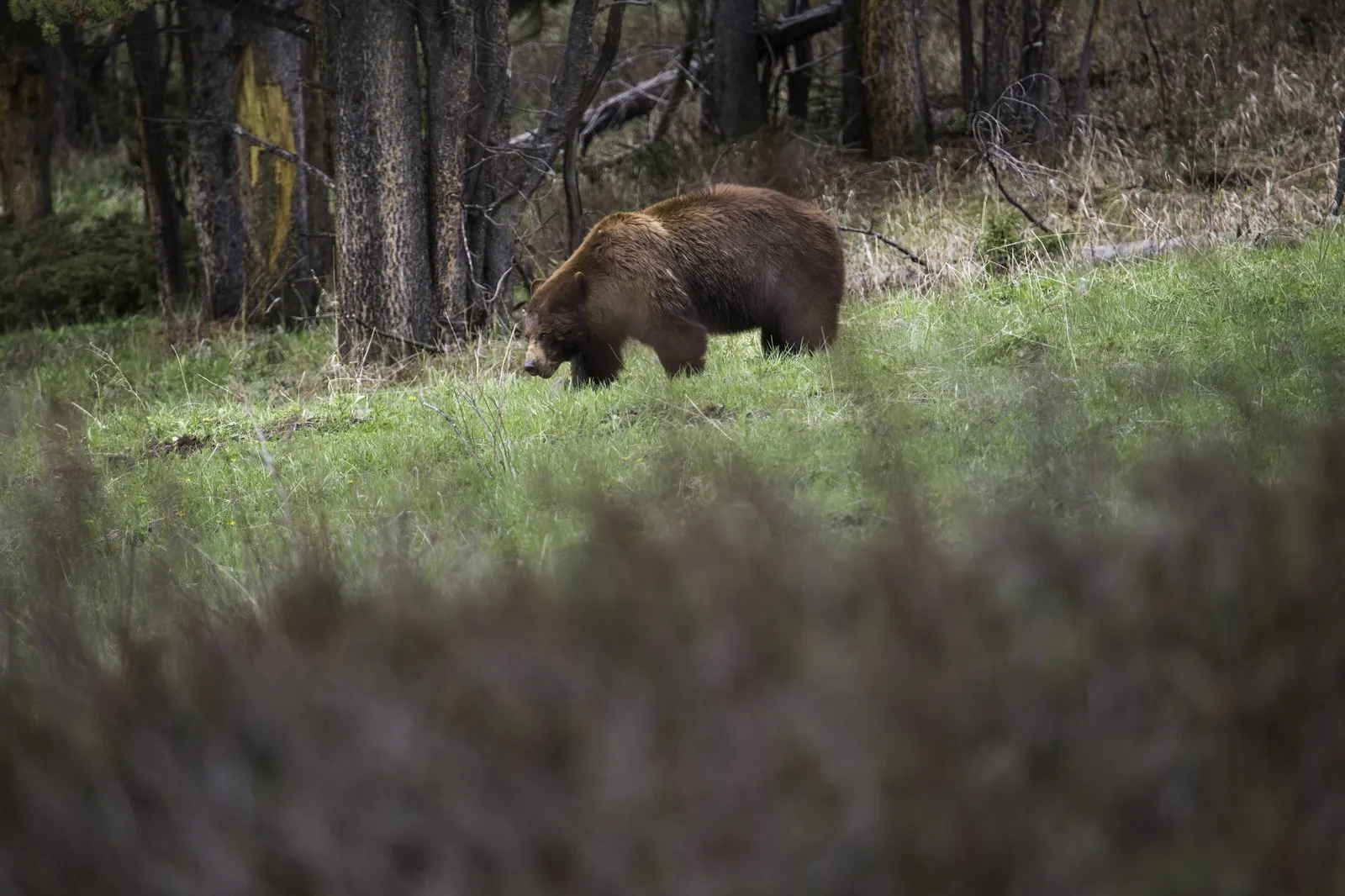
- Tower Junction to Mammoth Hot Springs road — most consistent black bear viewing in the park
- Blacktail Deer Plateau — open meadows where bears forage for berries
- Northeast Entrance road near Soda Butte Creek
- West Entrance road — occasional sightings near Madison River
- Phantom Lake area — bears scratch on trees here
Seasonal Bear Activity in Yellowstone
| Season | Activity | Where to Look |
|---|---|---|
| Spring (Apr–Jun) | Post-hibernation, cubs emerging, elk calving | Lamar, Hayden, Dunraven, Tower |
| Summer (Jul–Aug) | Higher elevations, trout spawning, berries | Fishing Bridge, backcountry, high meadows |
| Fall (Sep–Oct) | Hyperphagia — intense feeding before hibernation | Lamar, Hayden, Tower, berry patches |
| Winter (Nov–Mar) | Hibernation — bears not visible | N/A |
Best Months for Bears
May–June and September–October are the prime bear-viewing months. In May, sows emerge with tiny cubs. In September, bears enter hyperphagia — eating 20,000+ calories daily — and become much more visible and active.
Best Time of Day to See Bears
Bears are crepuscular — most active at dawn and dusk. Your best chances are:
- Dawn (6–8 AM): Bears forage in meadows and along rivers. Best light for photography.
- Dusk (5–8 PM): Bears return to open areas to feed before nightfall.
- Midday (10 AM–3 PM): Bears often rest in tree cover. Sightings are less common but not impossible.
- Overcast days: Bears tend to stay active longer into the morning on cloudy days.
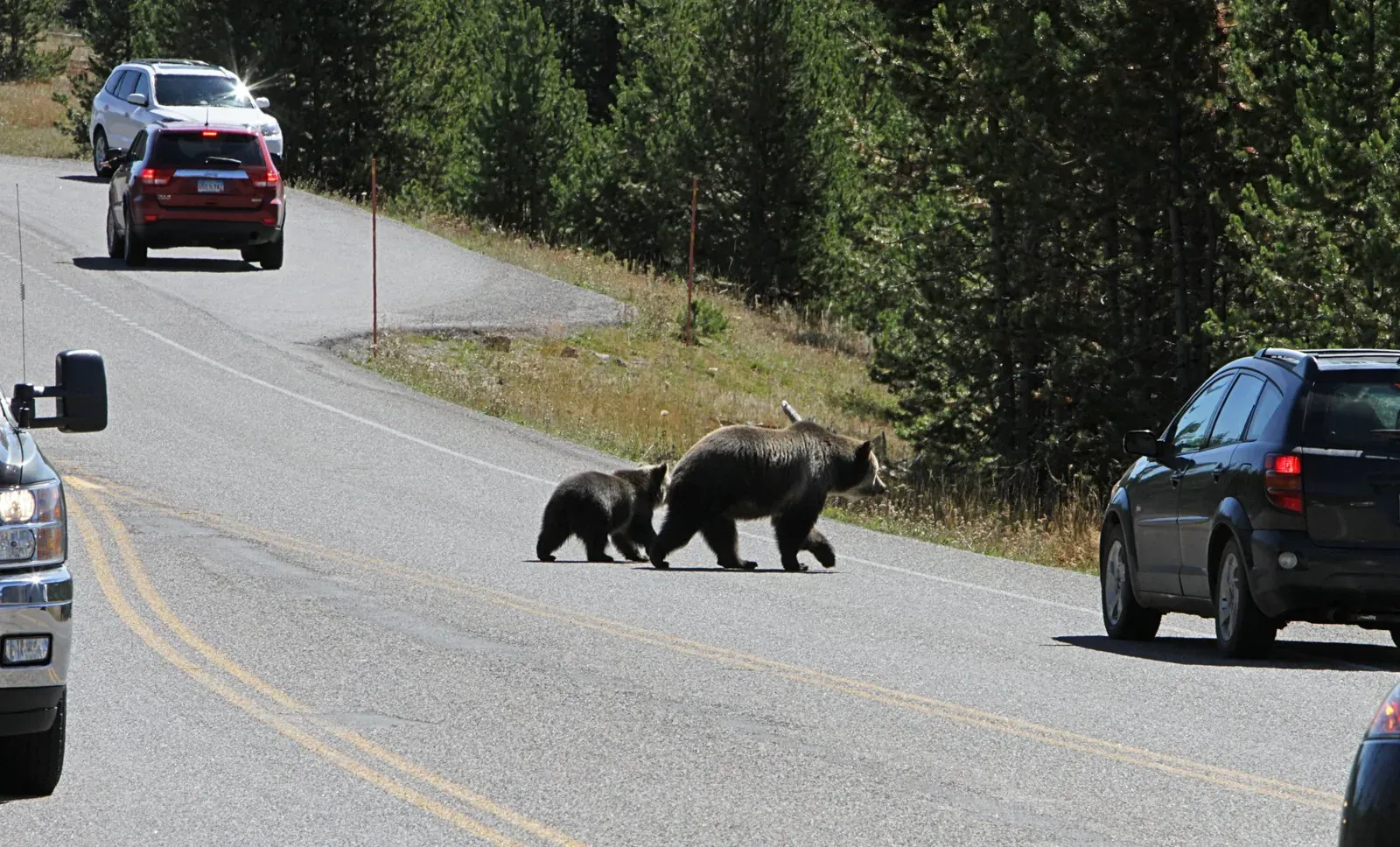
Viewing & Photography Tips
- Bring binoculars (10x42) or a spotting scope — most bear sightings are at 200+ yards
- A 400mm+ telephoto lens is essential for quality bear photos
- Scan hillsides, meadow edges, and stream corridors — not just the road
- Look for 'bear jams' (cars stopped with people looking) — but maintain safe distance
- Join other watchers — experienced regulars know the bears' daily patterns
- Be patient. Stake out a good spot at dawn and wait. Bears don't operate on your schedule.
- Never approach a bear for a photo. Use your zoom lens and maintain at least 100 yards.
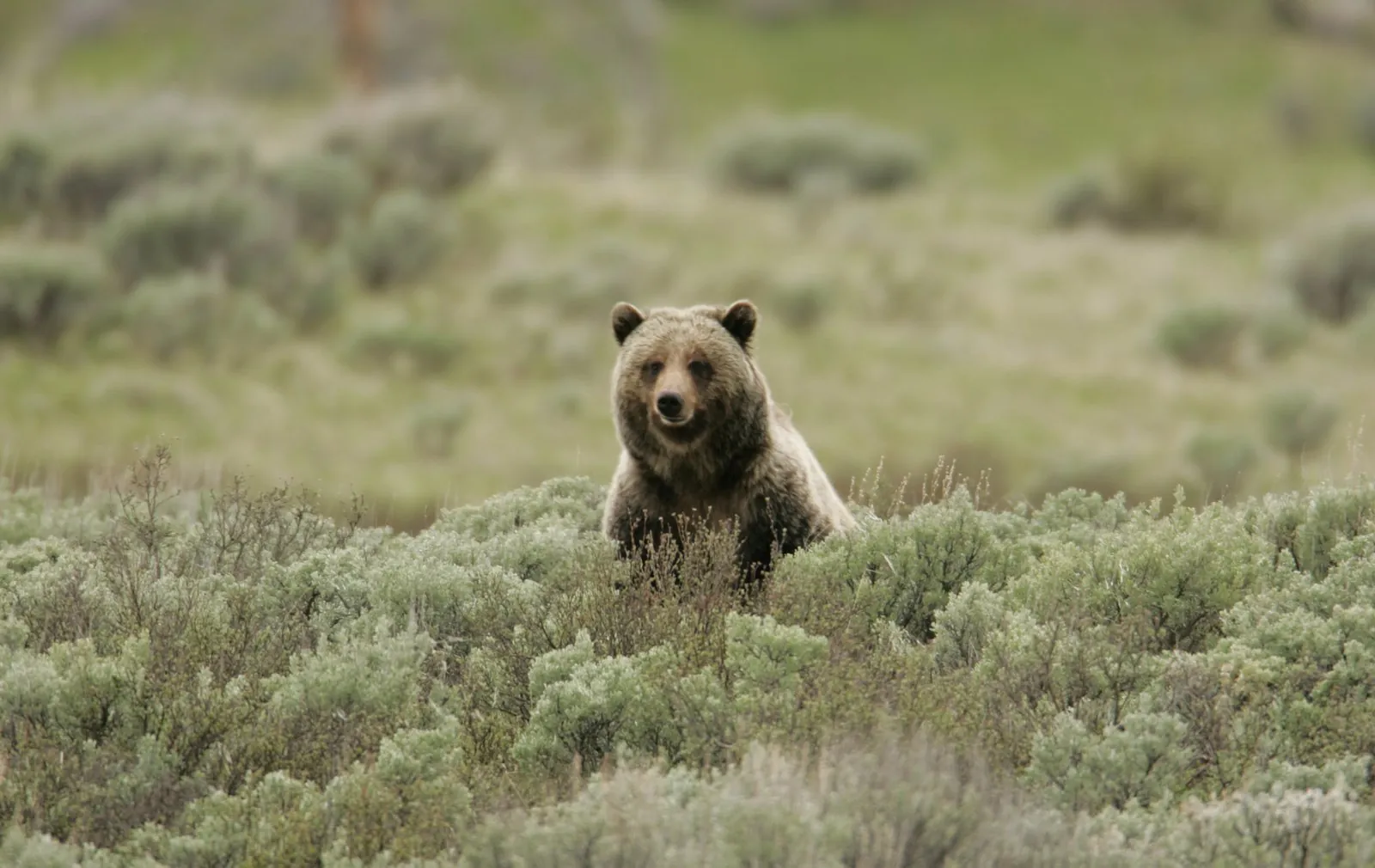
Bear Safety — Essential Rules
⚠️ Critical Safety Rules
- • 100-yard minimum distance from all bears (NPS regulation)
- • Stay in your vehicle during roadside sightings — your car is the best blind
- • Carry bear spray on all hikes — know how to use it before you need it
- • Never run from a bear — back away slowly and speak calmly
- • Store food properly — use bear boxes at campsites and trailheads
- • Make noise on trails — talk, clap, or use bear bells in blind corners
- • Hike in groups of 3+ — groups are almost never attacked
If You Encounter a Bear on a Trail
- Don't run. Bears can sprint at 35 mph.
- Stay calm. Speak in a low, steady voice.
- Make yourself appear large. Stand your ground.
- If a grizzly charges: stand your ground — most charges are bluffs. If contact occurs, play dead (face down, hands behind neck).
- If a black bear attacks: fight back aggressively. Black bear attacks are predatory.
- Bear spray is the most effective deterrent — more effective than firearms in studies.
Frequently Asked Questions
Where is the best place to see bears in Yellowstone?
Lamar Valley and Hayden Valley are the most reliable locations for grizzly bears. For black bears, the Tower Junction to Mammoth road is the park's most consistent corridor. In spring, Dunraven Pass is excellent for sows with cubs.
What months are bears most active?
May–June (post-hibernation, cubs emerging) and September–October (hyperphagia feeding frenzy). July–August bears tend to move to higher elevations and are harder to spot from roads.
Are bears dangerous in Yellowstone?
Bear attacks are extremely rare — roughly 1 per year across millions of visitors. Following safety rules (100-yard distance, bear spray, food storage) makes encounters safe. The biggest risk is approaching too close for photos.
Do I need bear spray?
Yes, if you plan to hike. Bear spray is required on many trails and recommended on all of them. It's available for rent and purchase at park stores and gateway town outfitters.