Why Winter Is the Hidden Season
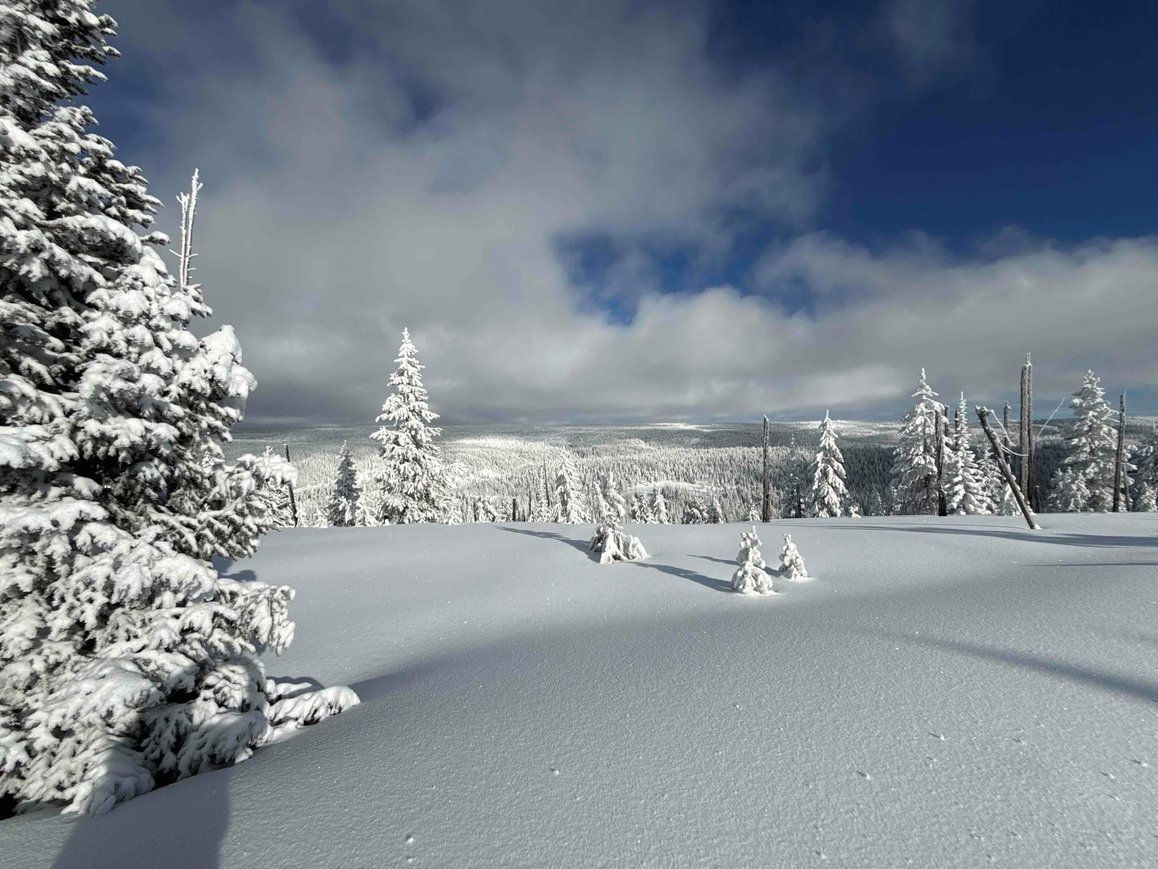
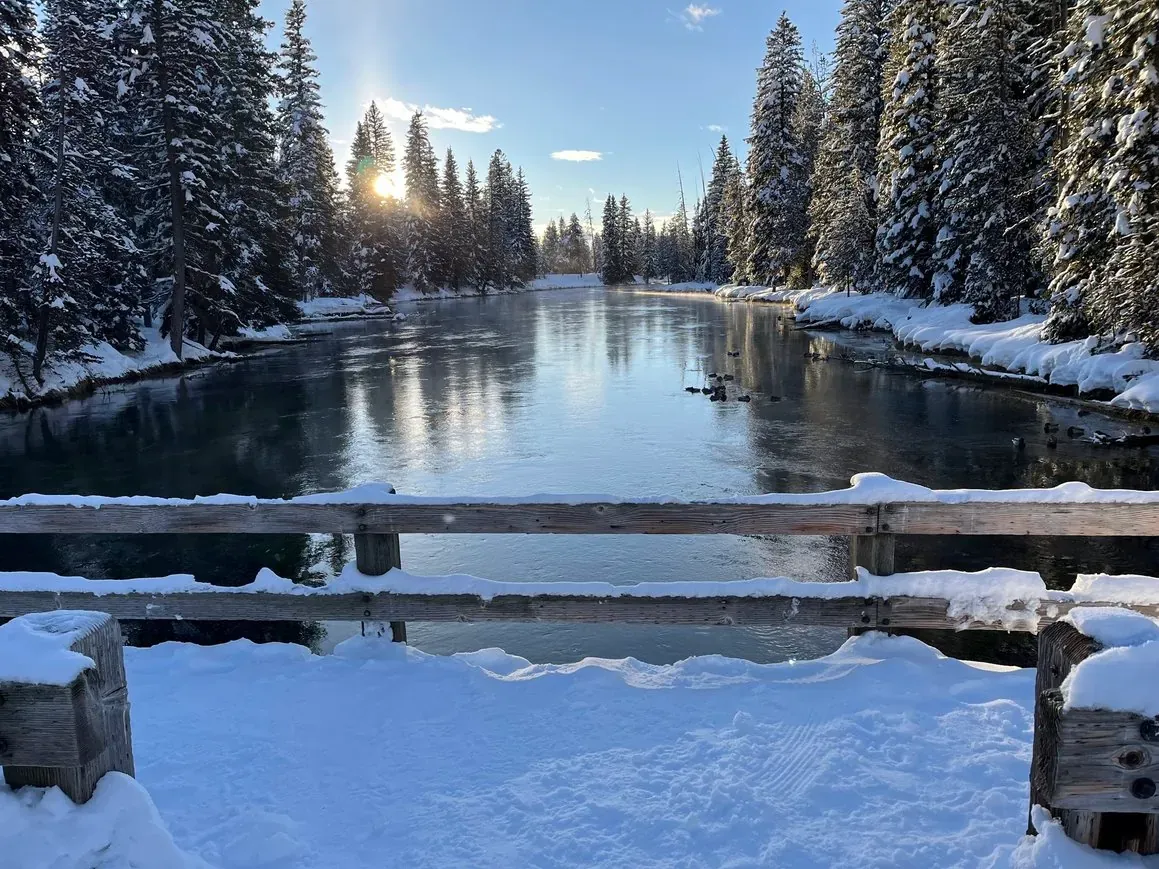
Winter transforms the Greater Yellowstone ecosystem into something almost unrecognizable. Crowds disappear. Roads close. Wildlife tracks stitch across fresh powder. Steam from geothermal basins rises into subzero air. Entire forests crystallize in white.
If you've only seen this region in summer, you haven't truly seen it. From the snow-covered geysers of Yellowstone to the alpine bowls of Grand Teton, from backcountry trails outside your cabin door to the legendary skiing at Big Sky Resort — winter here is quiet, wild, and unforgettable.
Yellowstone National Park in Winter: A Different Planet
From mid-December through early March, most park roads close to regular vehicles. Access is limited to snowcoach tours, guided snowmobile tours, cross-country skis, and snowshoes. And that's exactly why it's magical.
Geysers in Freezing Air
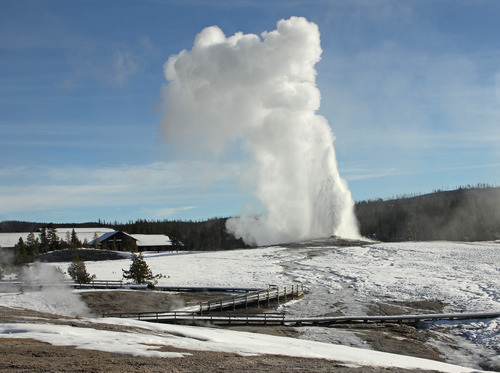
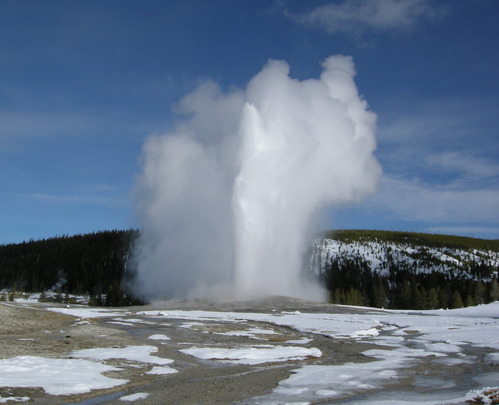
Old Faithful erupting into a sky filled with snow crystals feels surreal. Steam plumes are thicker. Colors are sharper. Sound carries farther across the frozen landscape.
Snowcoach Tours
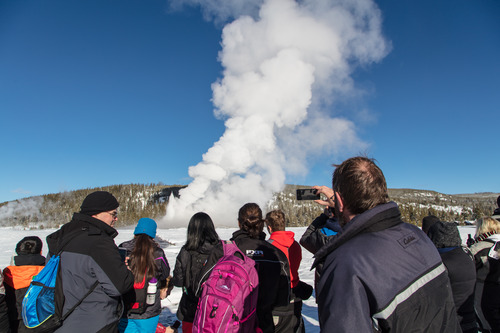
Guided snowcoach tours depart daily from West Yellowstone, taking you deep into the park on heated, tracked vehicles. Most tours visit Old Faithful, the Grand Canyon of the Yellowstone, or both.
📅 Book Early
Winter tours sell out weeks in advance. Book your snowcoach or guided snowmobile tour as soon as you have your dates. Old Faithful Snow Lodge is the only wintertime accommodation inside the park.
What You'll See
- Bison pushing through chest-deep snow drifts along the Firehole River
- Wolves hunting in Lamar Valley (accessible via the North Entrance year-round)
- Coyotes hunting rodents beneath the snow — listen for the telltale pounce
- Elk wintering in valleys and thermal areas
- Steam vents, fumaroles, and hot springs framed by snow and ice
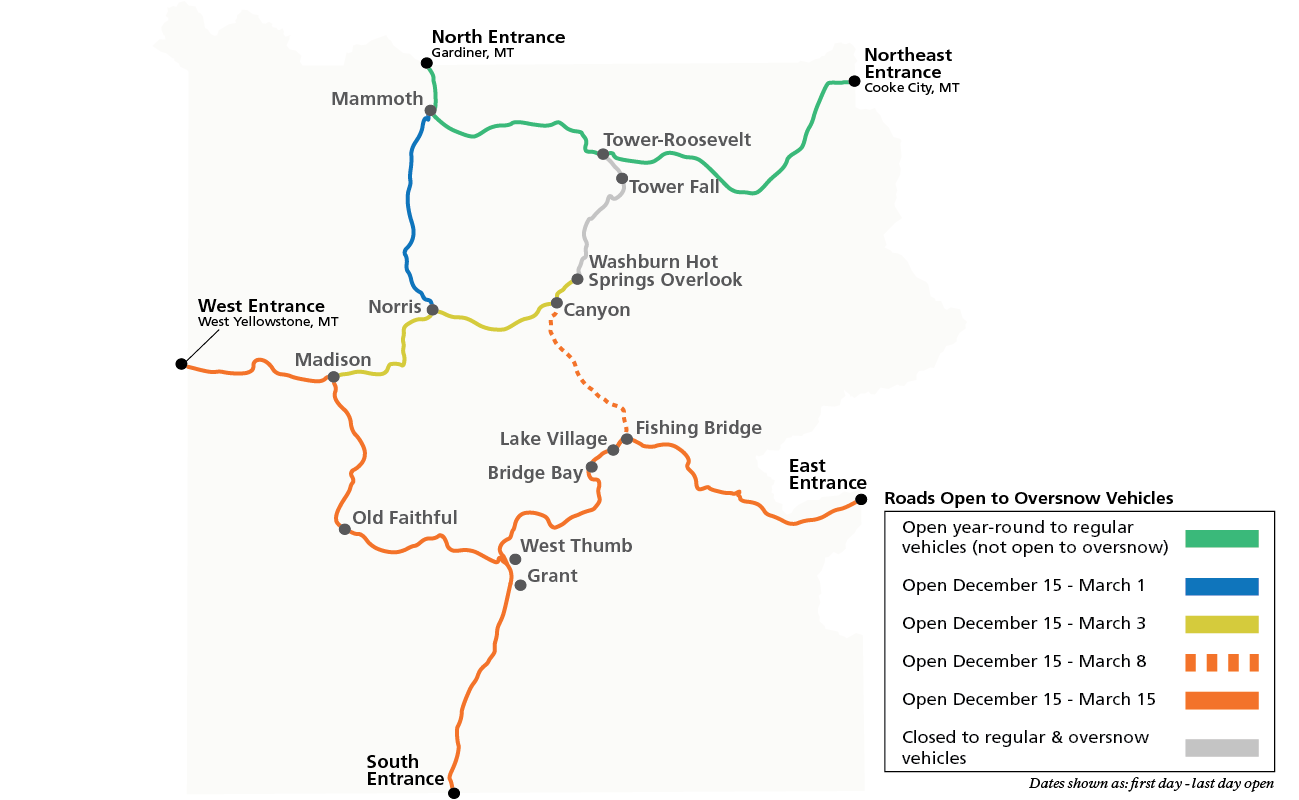
Winter Access Map
Only the road between the North Entrance (Gardiner, MT) and the Northeast Entrance (Cooke City, MT) remains open to regular vehicles year-round.
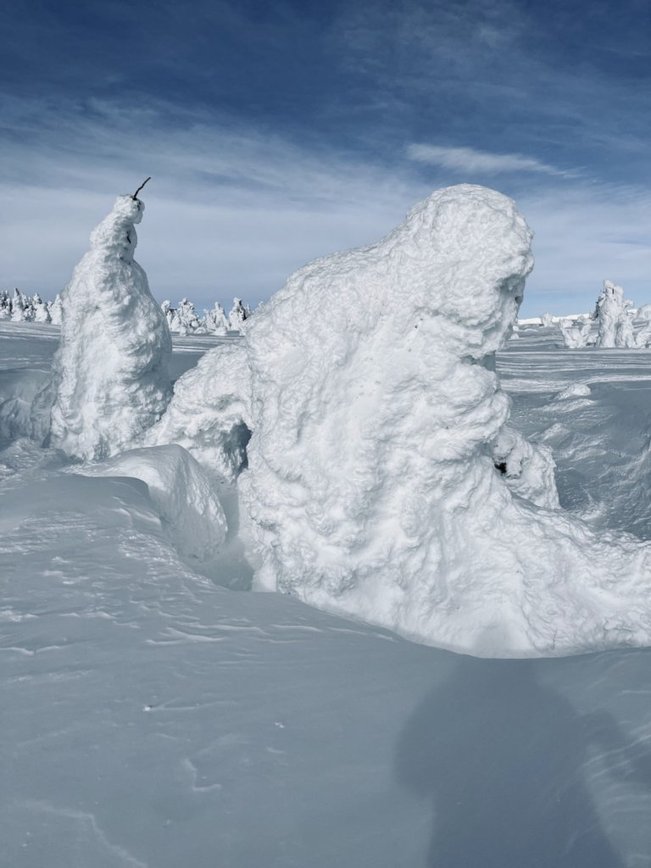
Snow Ghosts of Two Top Mountain
One of the most otherworldly winter phenomena in the world happens just west of Yellowstone on Two Top Mountain near West Yellowstone. They're called snow ghosts — and they are unforgettable.
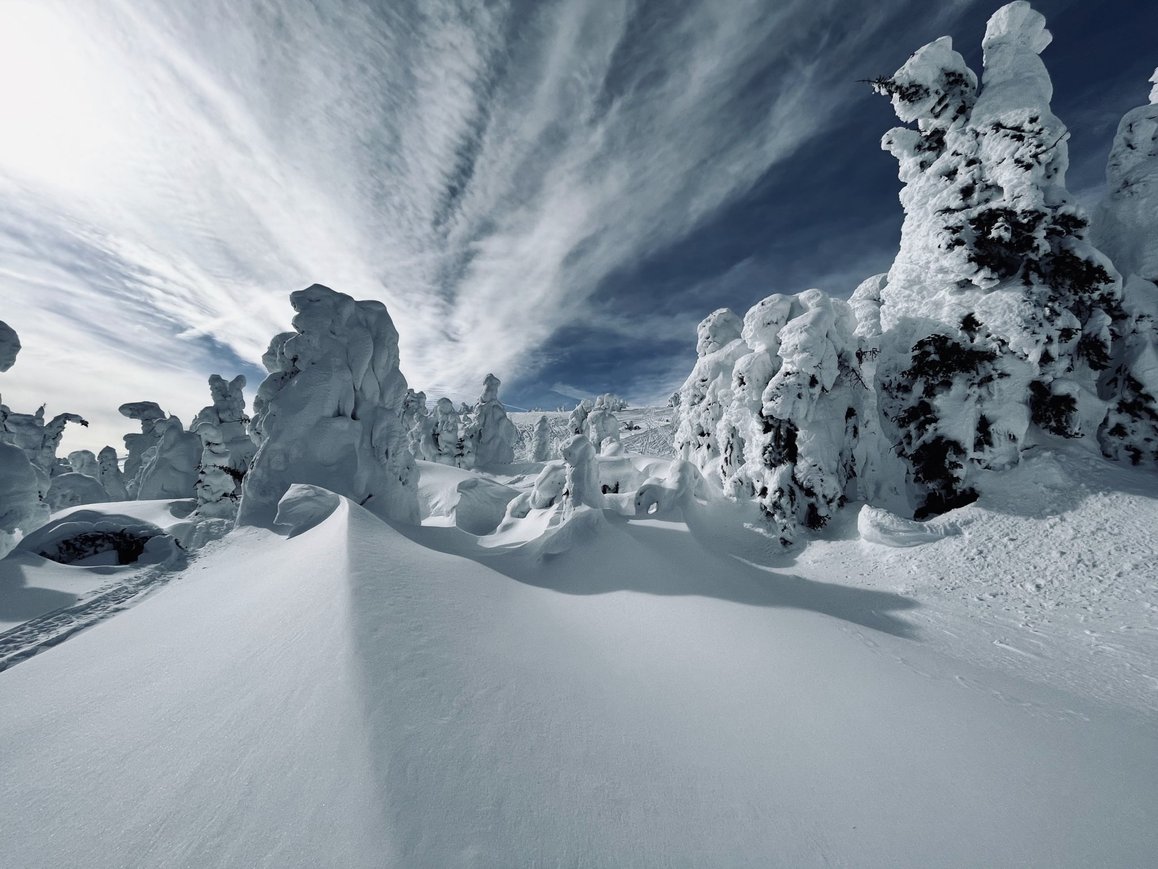
What Are Snow Ghosts?
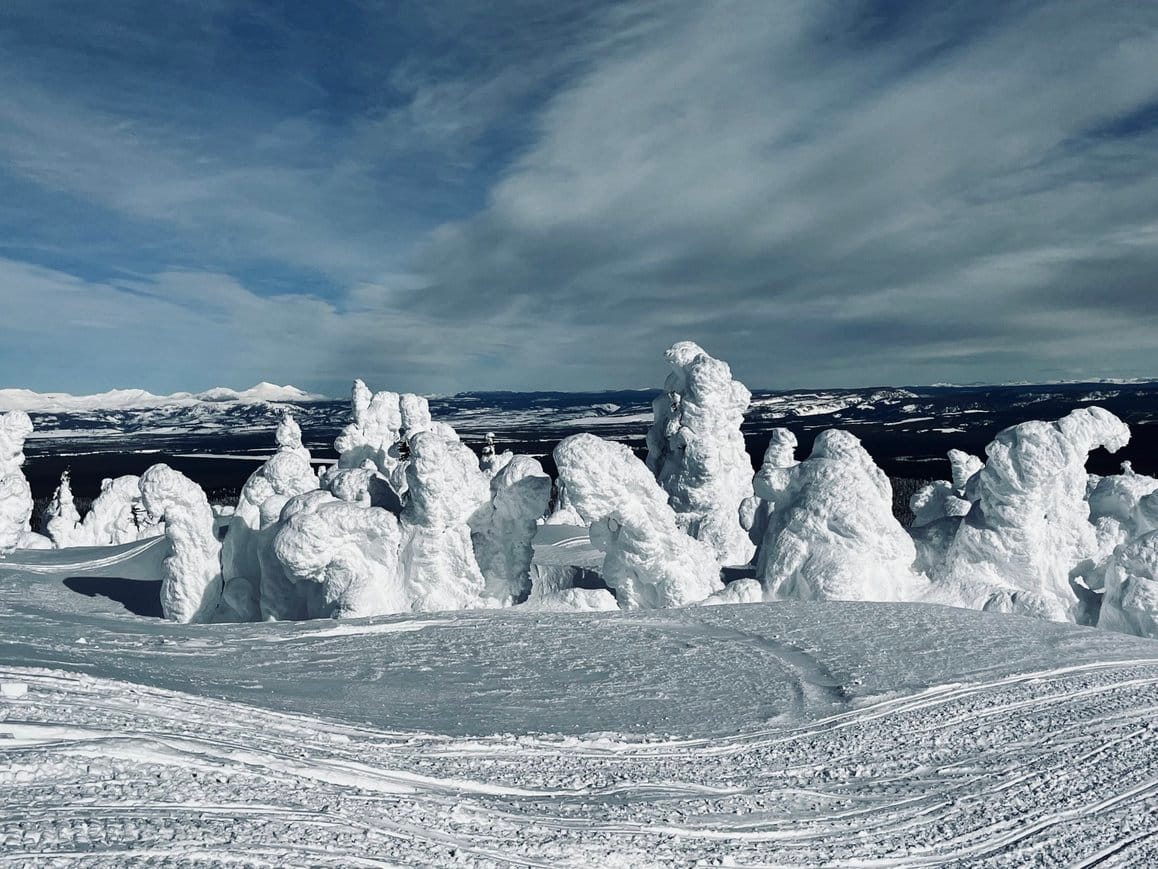
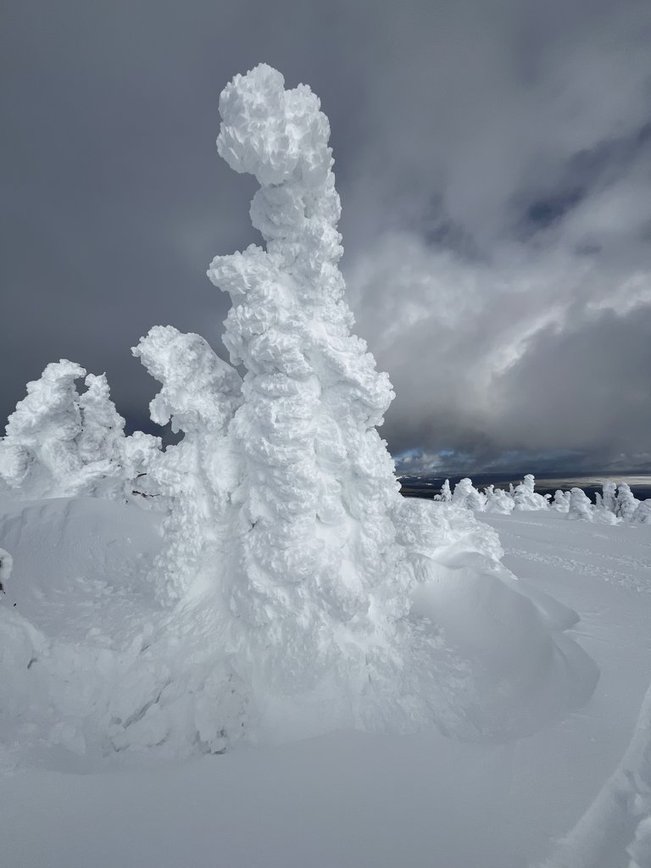
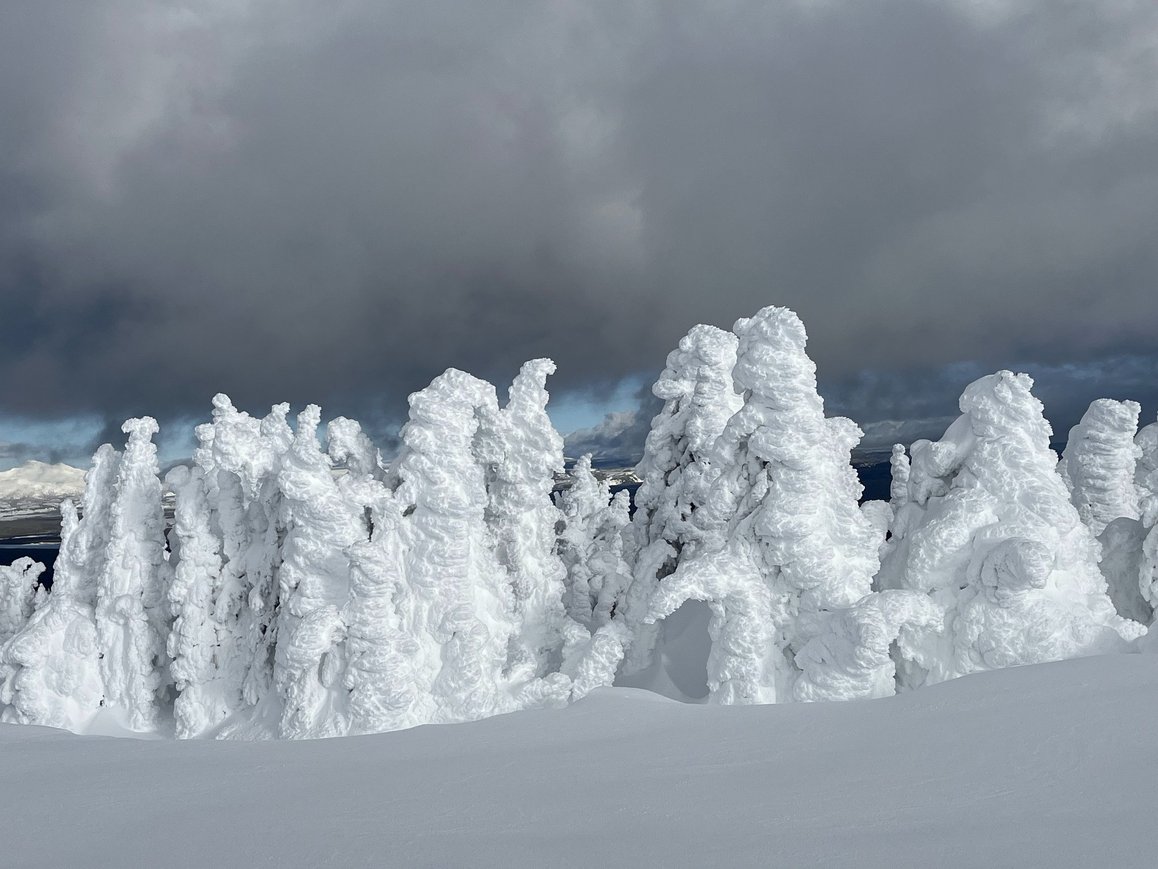
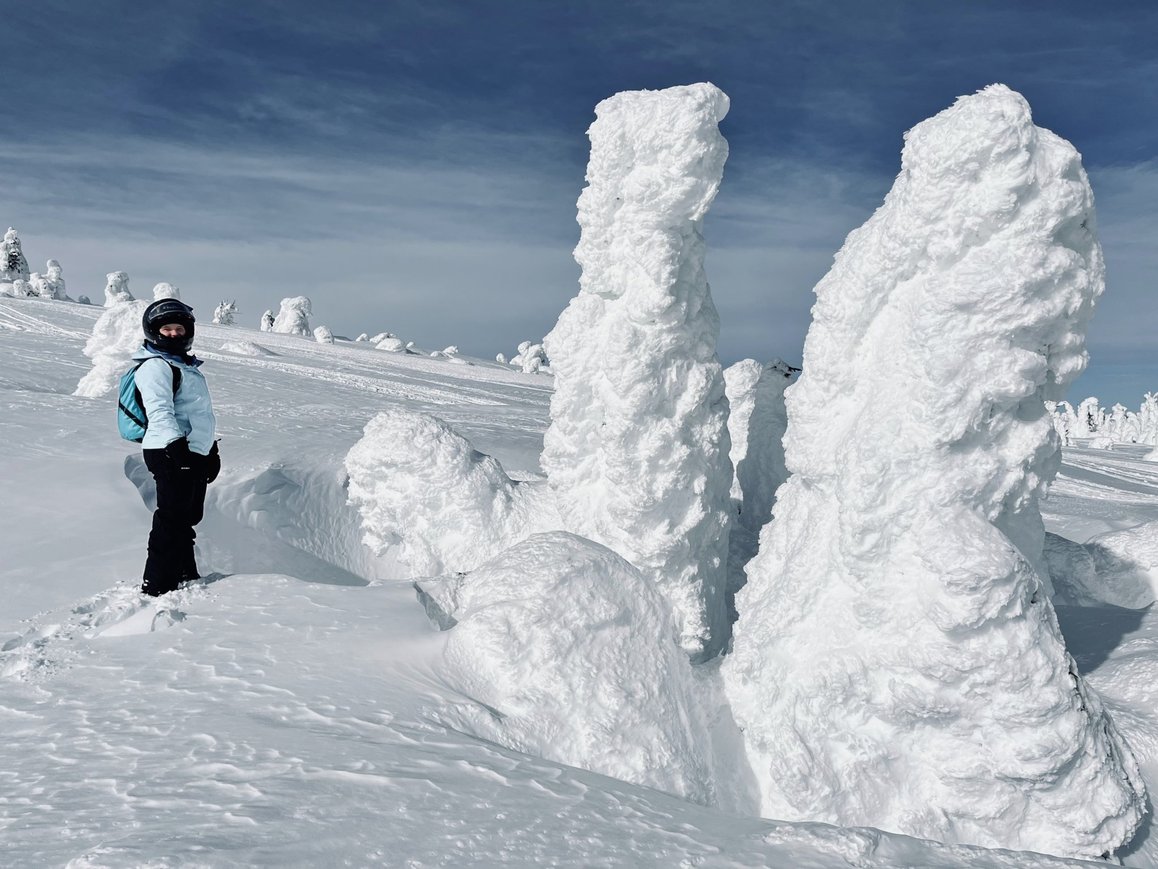
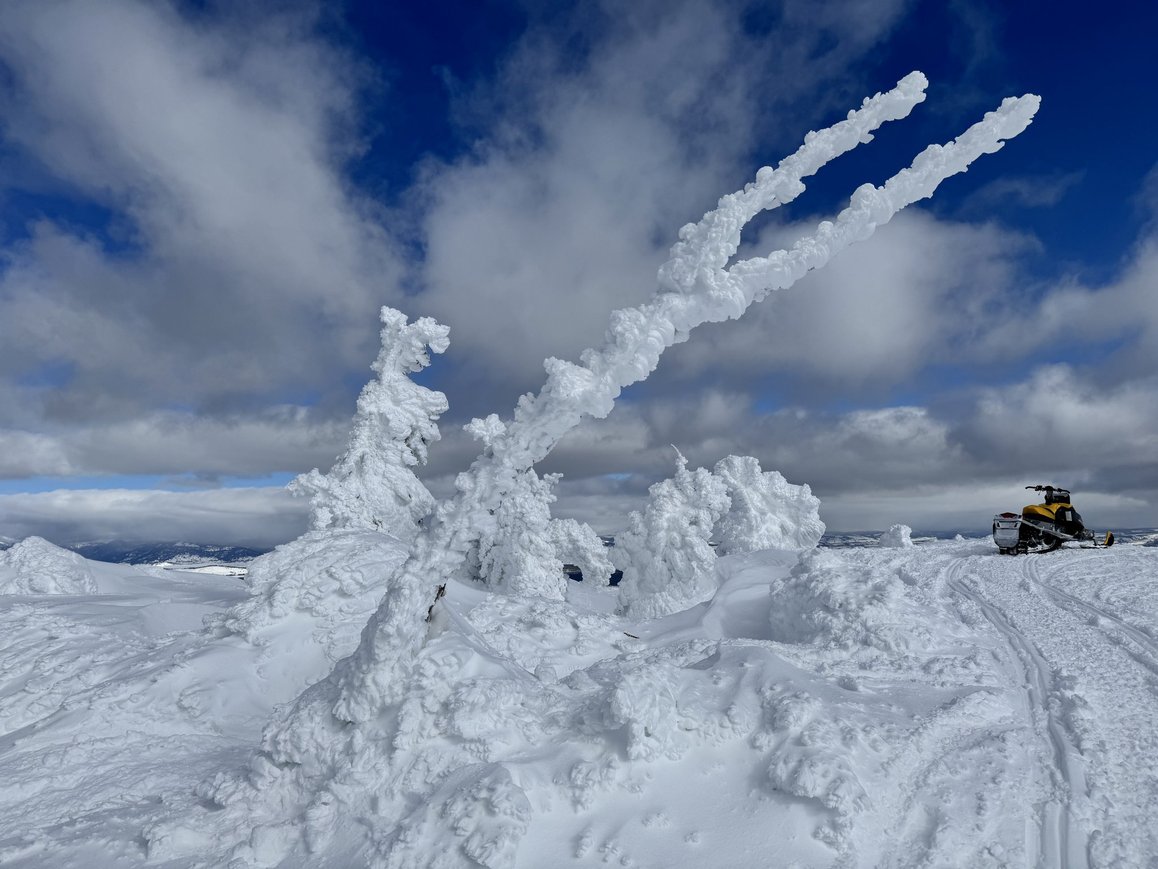
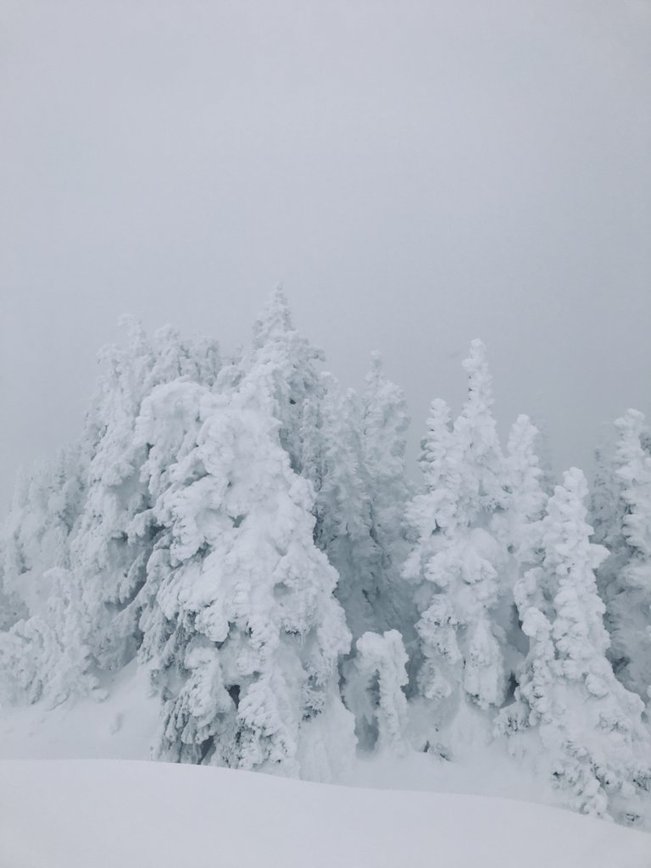
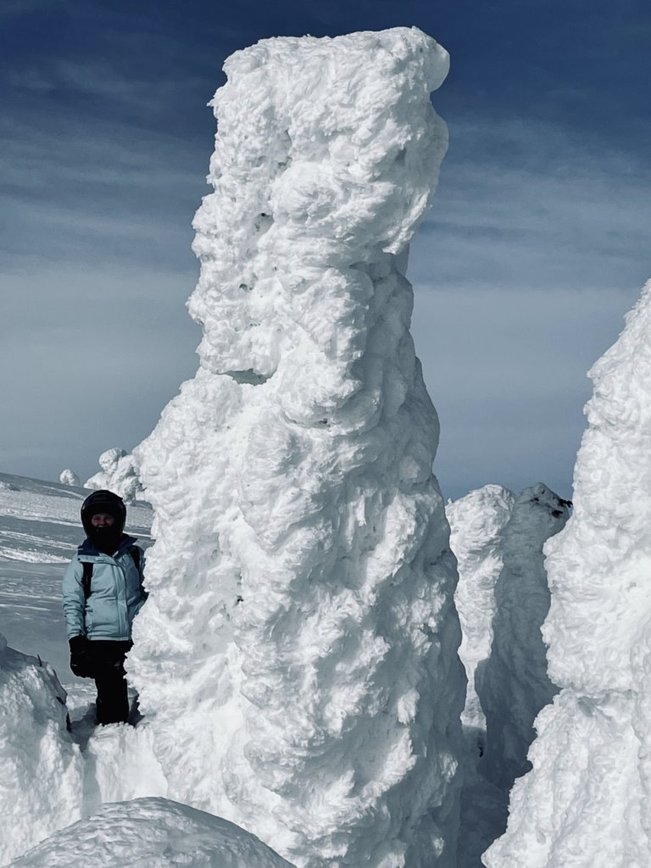
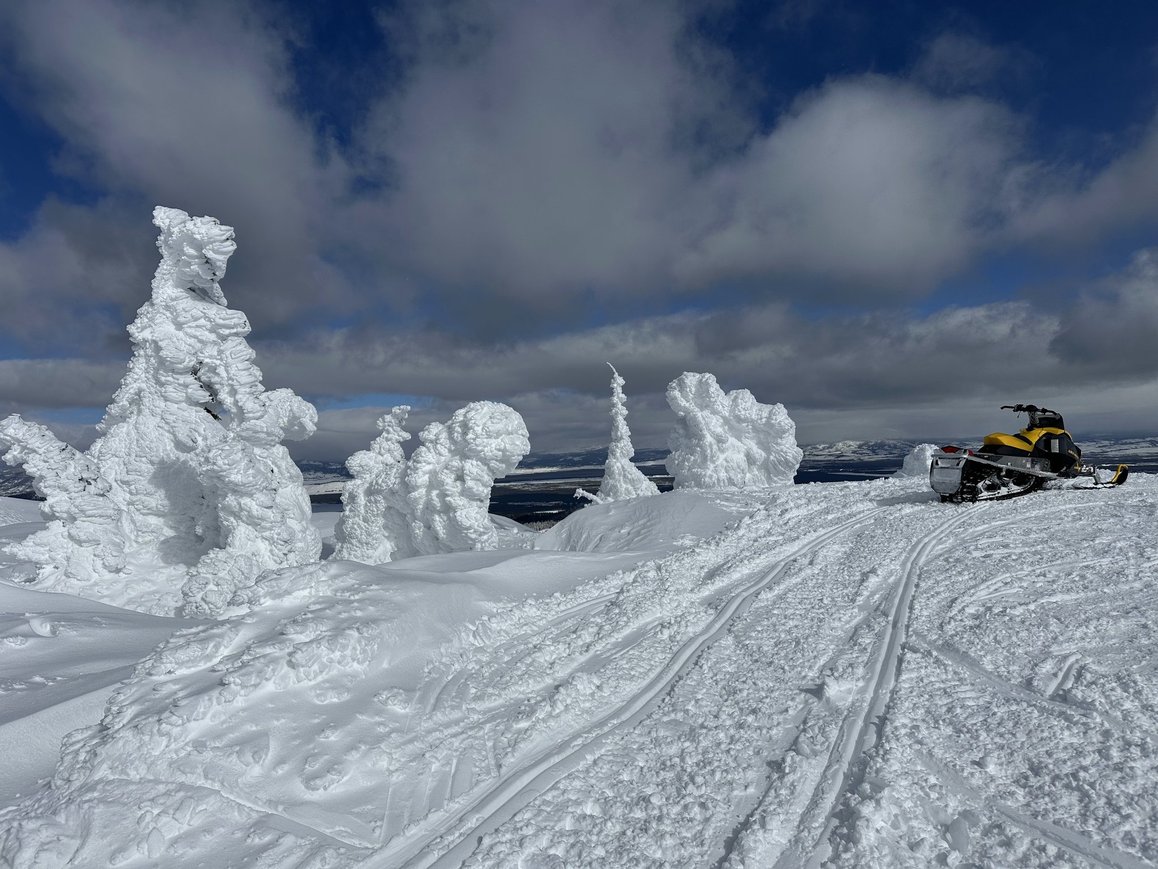
Snow ghosts are evergreen trees completely encased in rime ice and frozen snow, transformed into towering white sculptures. They form when moist air rises along the mountain, temperatures drop well below freezing, and supercooled water droplets freeze instantly on contact with branches.
The result: an entire forest of frozen white figures leaning in the direction of the prevailing wind. It feels like walking through a frozen army of silent sentinels.
Why Two Top Mountain Is Famous
Two Top Mountain (elevation 8,864 ft) sits in the Gallatin National Forest just north of West Yellowstone. Its exposure to moisture-laden Pacific air and consistently subzero temperatures create some of the largest and most photogenic snow ghosts in North America.
- Accessible via snowmobile — part of the extensive Two Top / Lionhead trail system
- Best viewed mid-winter (January–February) when rime accumulation peaks
- Guided snowmobile tours to Two Top depart from West Yellowstone daily
- The summit offers panoramic views of the Yellowstone caldera, Henry's Lake Mountains, and the Centennials
- Early morning light creates the most dramatic photography conditions
📸 Snow Ghost Photography Tip
The best snow ghost images happen at sunrise when warm light turns the white formations gold and pink. If you're joining a snowmobile tour, request the earliest departure time.
Lionhead Mountain
Just south of Two Top, Lionhead Mountain (elevation 9,586 ft) offers another spectacular snow ghost experience. Together, Two Top and Lionhead form the crown jewels of the West Yellowstone snowmobile trail system.
Snowmobiling: The Region's Signature Winter Experience
Island Park and West Yellowstone sit at the center of one of the largest interconnected groomed snowmobile trail systems in the United States. Hundreds of miles of maintained routes stretch across the region.
Trail Systems
⛰ Two Top Mountain
Famous for snow ghosts. Groomed trails climb to 8,800+ ft with panoramic views. Access from West Yellowstone.
⛰ Lionhead / Continental Divide
Ride to nearly 10,000 ft along the Continental Divide. Deep powder, dramatic ridgelines, and snow ghosts.
🌲 Bear Gulch / Island Park
Rolling forested trails perfect for families. Direct access from many Island Park properties including our cabin.
📍 Yellowstone Park Tours
Guided snowmobile tours from the West Entrance into Old Faithful and the geyser basins. Requires a licensed guide.
🏠 Direct Trail Access
Our cabin connects directly to the groomed trail system. Step outside, fire up your sled, and access hundreds of miles of backcountry terrain without trailering.
- Rentals available at several local outfitters (High Mountain Adventures, Island Park Rentals)
- Full-day guided Yellowstone tours available through West Yellowstone operators
- Trails groomed from mid-December through mid-March depending on snowfall
- Backcountry powder riding for advanced riders in the Centennials
- Night rides available on select trails with proper lighting
Winter in Island Park, Idaho
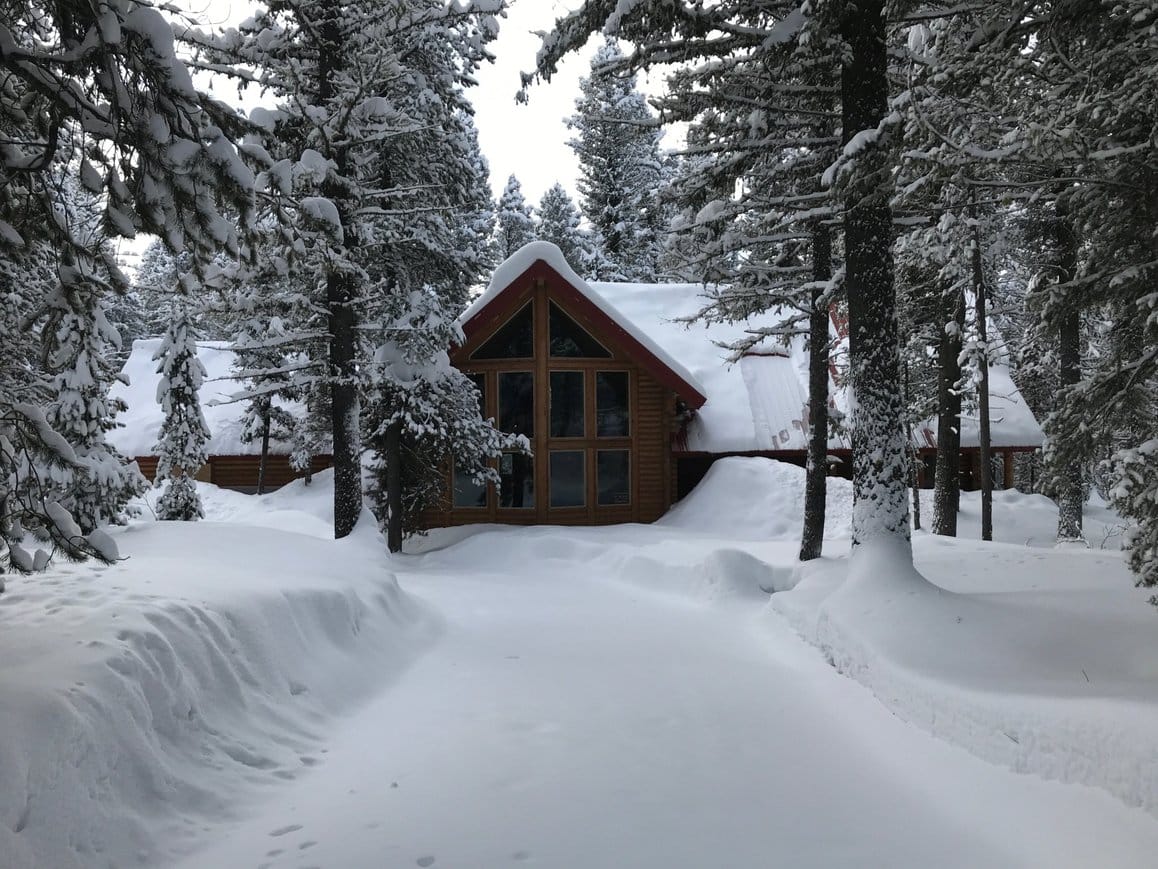
Island Park isn't just a gateway to Yellowstone — it's a winter destination in its own right. The town sits at 6,300 feet in a volcanic caldera, receiving consistent, dry Rocky Mountain powder from November through March.
What Makes Island Park Special in Winter
- Direct snowmobile trail access from many properties — no trailering needed
- 30 minutes to Yellowstone's West Entrance for snowcoach and guided snowmobile tours
- Harriman State Park offers 25+ miles of groomed Nordic ski trails
- Mesa Falls — one of Idaho's tallest waterfalls — becomes a frozen spectacle
- Big Springs stays open year-round, steaming in subzero air with resident trumpeter swans
- Far fewer visitors than West Yellowstone, with lower lodging prices and more space
- Henry's Lake offers excellent ice fishing for trophy cutthroat trout
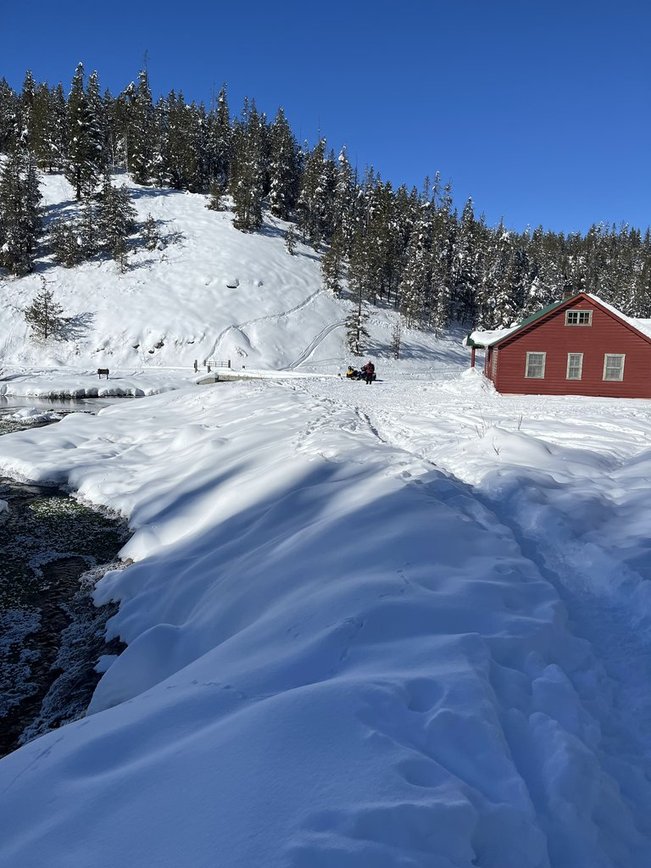
Johnny Sack Cabin
A hidden gem in winter, the historic Johnny Sack Cabin sits right on Big Springs. In winter, the surrounding landscape transforms into a postcard scene.
Harriman State Park: Idaho's Nordic Paradise
Just minutes from Island Park, Harriman State Park becomes one of the best cross-country skiing destinations in the American West. Over 25 miles of groomed Nordic trails wind through open meadows, aspen groves, and along the Henry's Fork.
- Trails groomed for both classic and skate skiing
- Snowshoe routes through forest and along the river
- Flat terrain perfect for all skill levels — families love it
- Moose, bald eagles, and river otters frequently spotted
- Trail pass required ($7/vehicle) — ski rentals available locally
- Season runs December through March
🤫 Local Secret
Harriman in the early morning after fresh snowfall is one of the most peaceful experiences in Idaho. You'll often have entire trails to yourself.
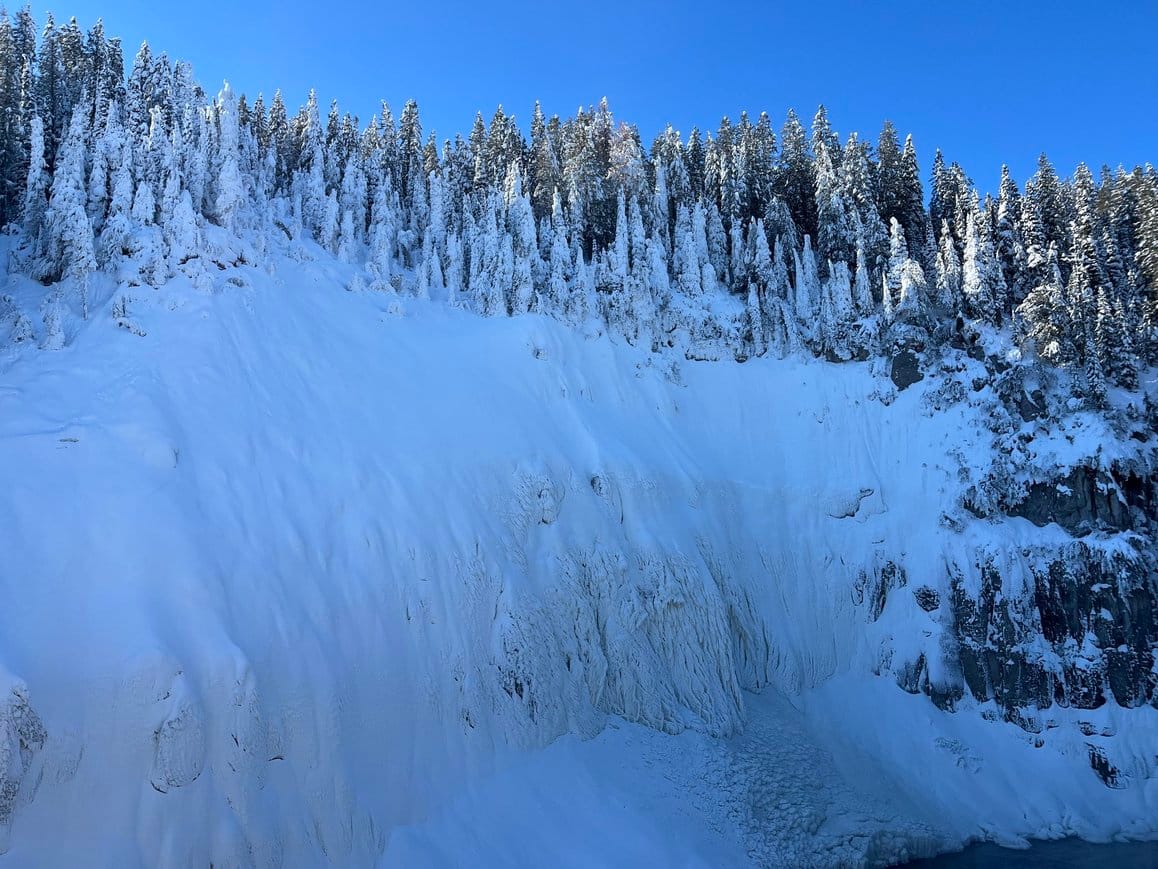
Mesa Falls in Winter: Frozen Thunder
Upper and Lower Mesa Falls near Ashton are dramatic year-round — but in winter, they become monumental. Ice formations climb canyon walls. Mist freezes into shimmering curtains.
Winter Wildlife: Easier to Spot Than You Think
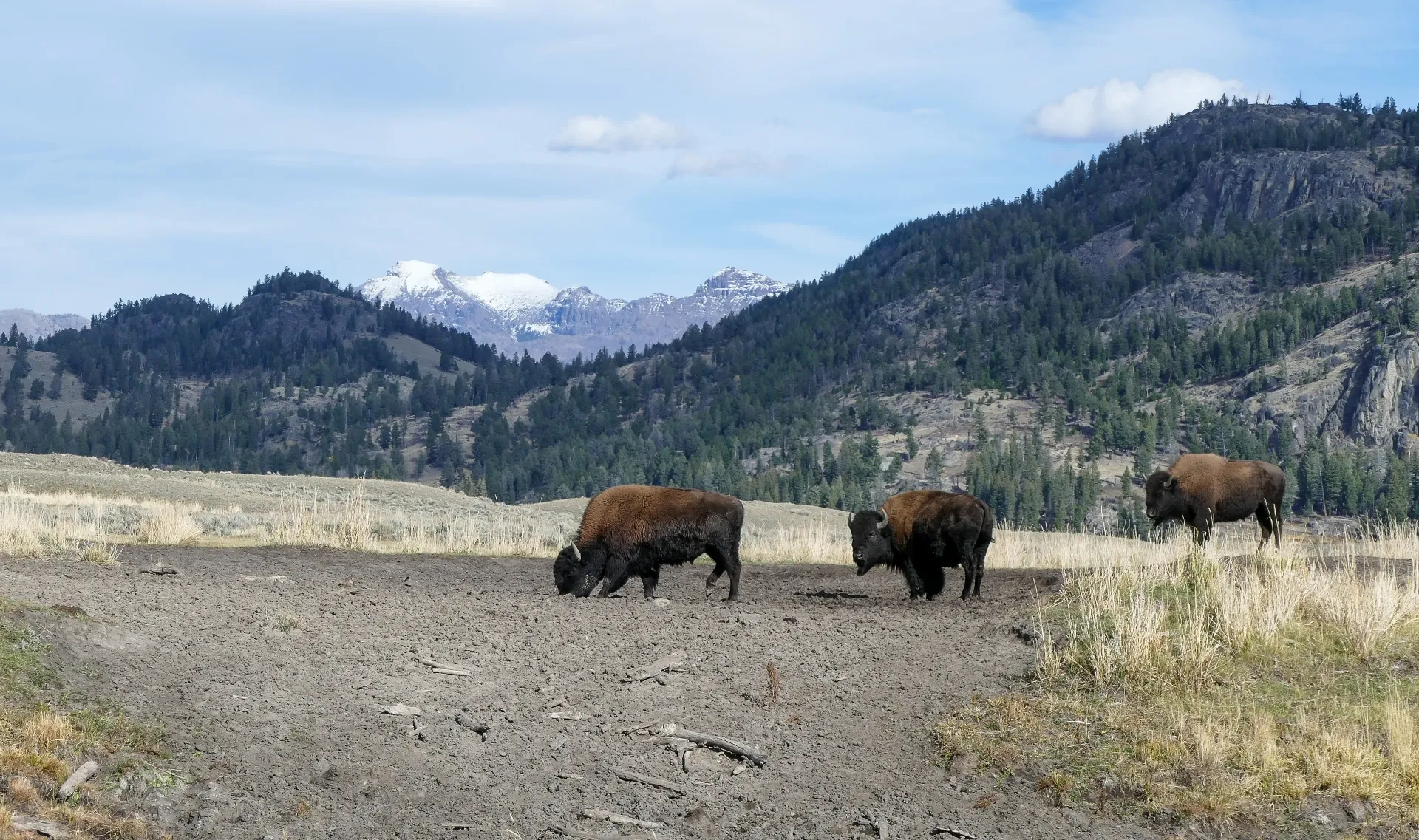
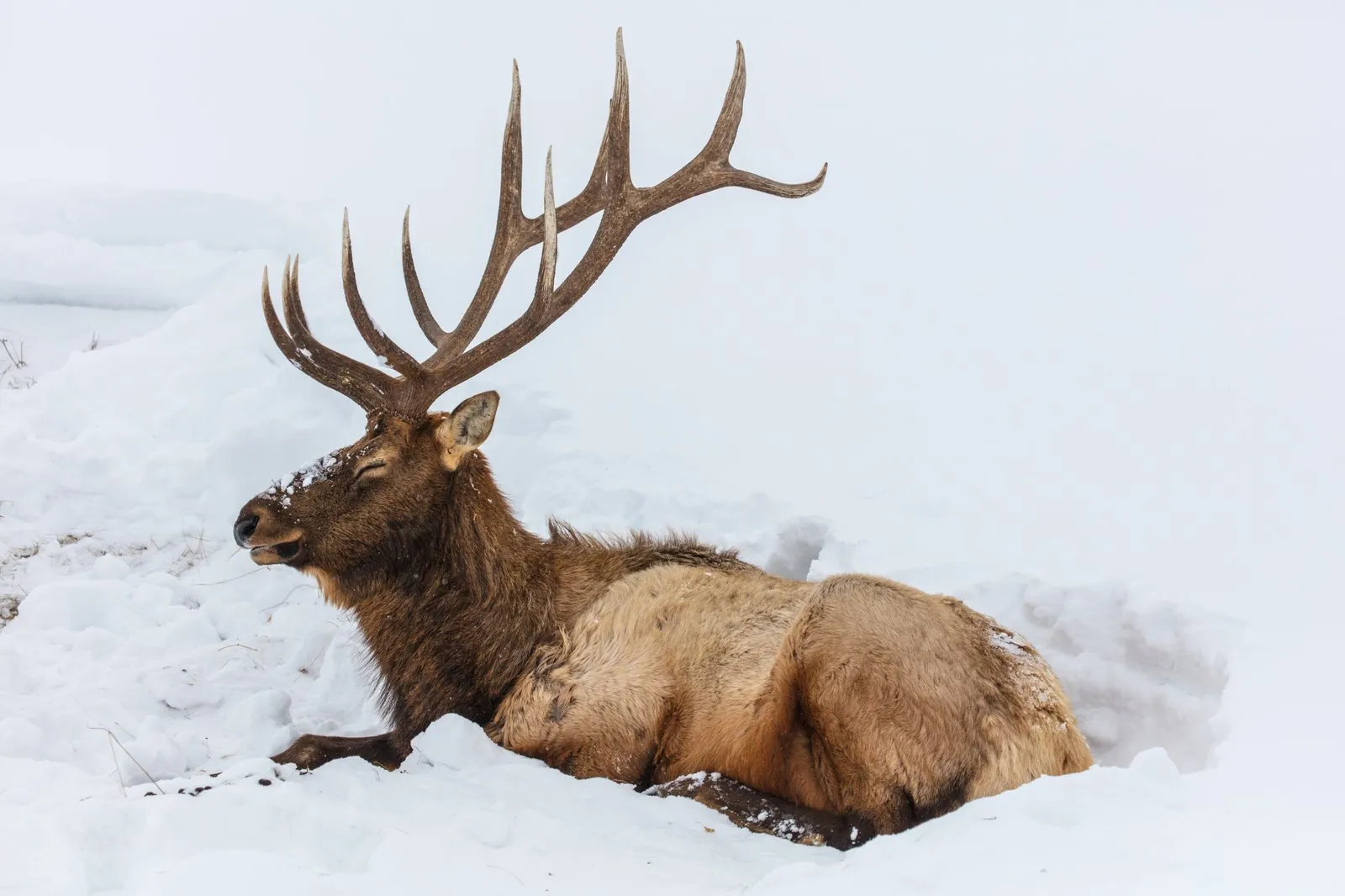
Deep snow concentrates wildlife movement into valleys, thermal areas, and river corridors — making winter one of the best seasons for animal sightings.
What to Watch For
- Bison — herds concentrate near thermal areas and the Firehole/Madison Rivers
- Wolves — Lamar Valley is the premier wolf-watching destination worldwide
- Elk — large herds winter in the northern range between Mammoth and Cooke City
- Coyotes — watch for the telltale hunting pounce into snow for rodents
- Trumpeter swans — Big Springs in Island Park has a resident winter flock
- Moose — common in willow bottoms around Island Park and Harriman
- Red fox — Hayden Valley and Lamar Valley, often photographed hunting in snow
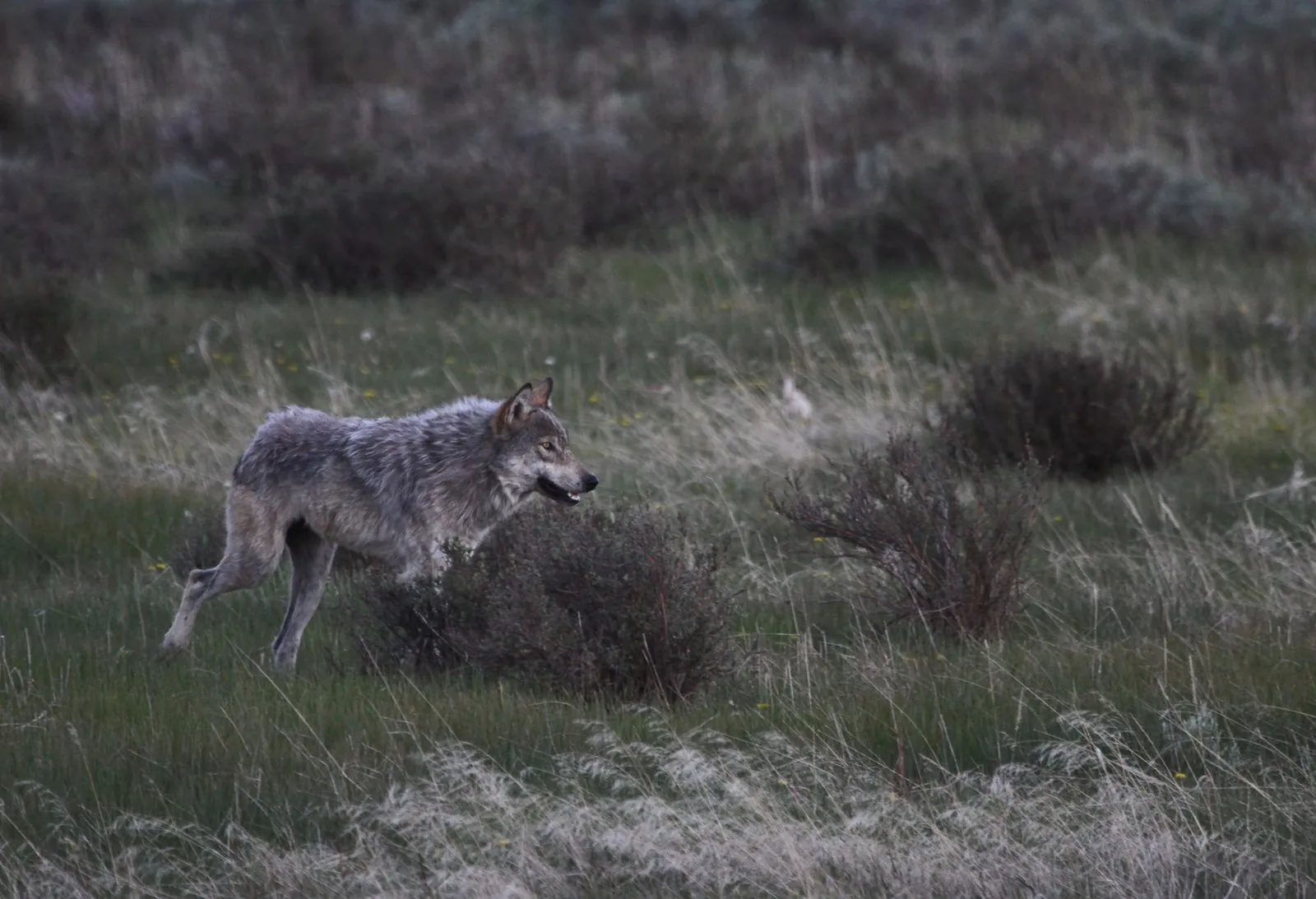
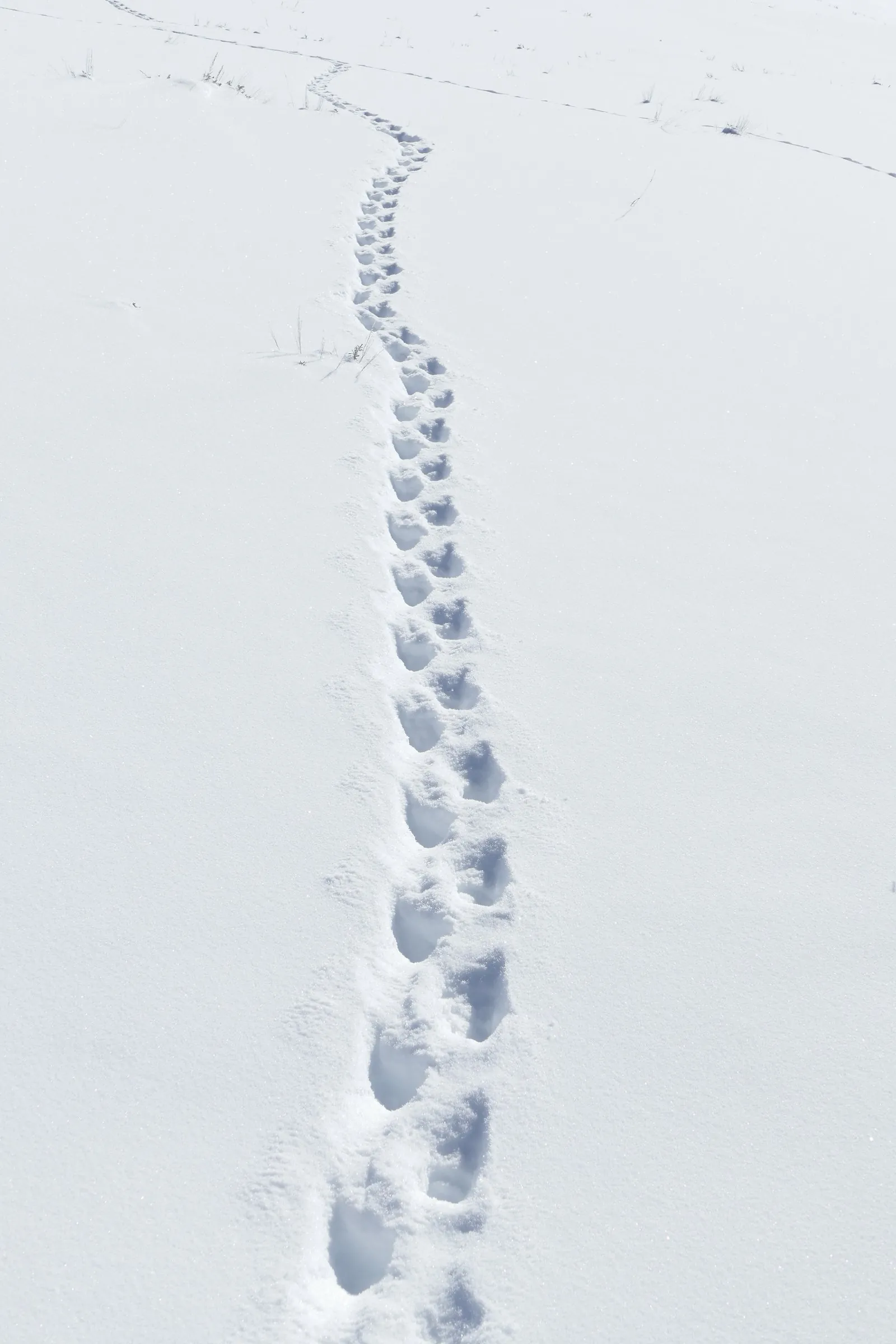
🔭 Winter Wildlife Viewing Tip
Bring binoculars or a spotting scope. Lamar Valley via the North Entrance (Gardiner) is the only area accessible by regular vehicle in winter — and it's the best wildlife corridor in the park.
Grand Teton National Park in Winter
The Tetons are sharper, quieter, and more dramatic in winter light.
- Cross-country skiing on the closed Teton Park Road — a flat, scenic route beneath the peaks
- Snowshoeing around Taggart Lake through snow-buried forest
- Wildlife viewing in the sage flats — moose are frequently seen in river bottoms
- Elk migrate through the National Elk Refuge near Jackson, with sleigh ride tours
- The peaks themselves are at their most photogenic — sharp ridges, deep shadows, cold blue light
Grand Teton is about 2.5 hours south of Island Park — an easy day trip that pairs perfectly with a stop in Jackson.
Skiing at Big Sky Resort
About 90 minutes north of Island Park lies Big Sky Resort in Montana — one of the largest ski resorts in North America with 5,800+ skiable acres.
⛰ Advanced Terrain
The Tram to Lone Peak summit. Big Couloir. Wide-open alpine bowls. Steep chutes that rival Colorado or Utah — with a fraction of the lift lines.
👨👩👧👦 Family Friendly
Excellent ski school programs. Modern high-speed lifts. Long groomed cruisers for intermediate skiers. Terrain for every skill level.
The unique advantage: you can ski world-class terrain by day and return to quiet cabin solitude at night.
Your Winter Basecamp
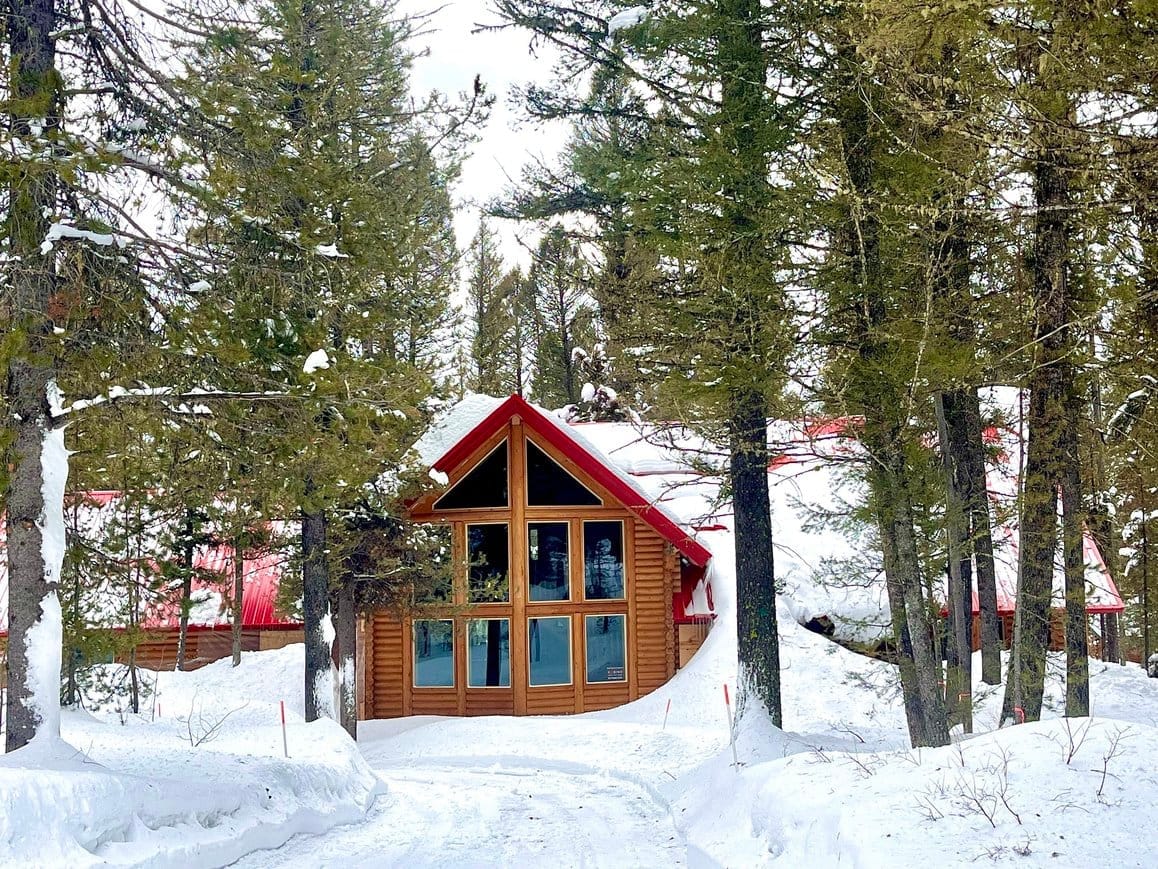
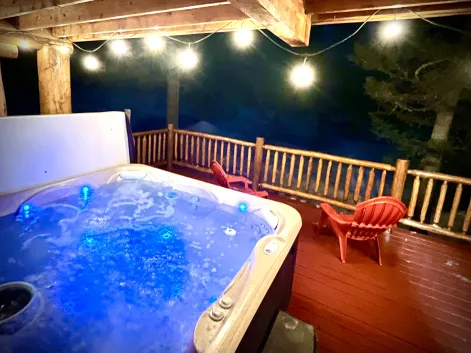
Our cabin in Island Park is purpose-built for winter. Direct trail access means you can snowmobile right from the property. After a day on the trails, warm up in the private hot tub under the stars.
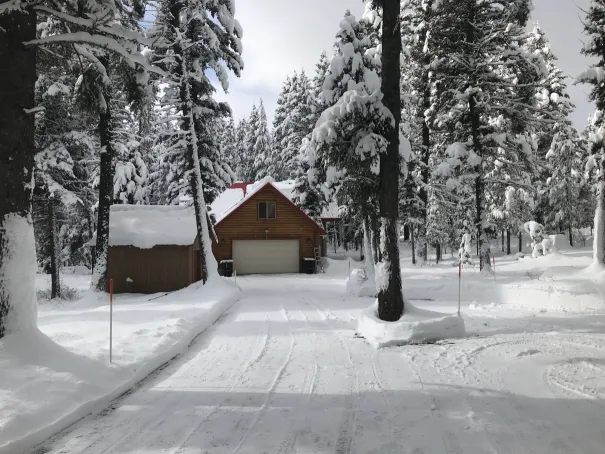
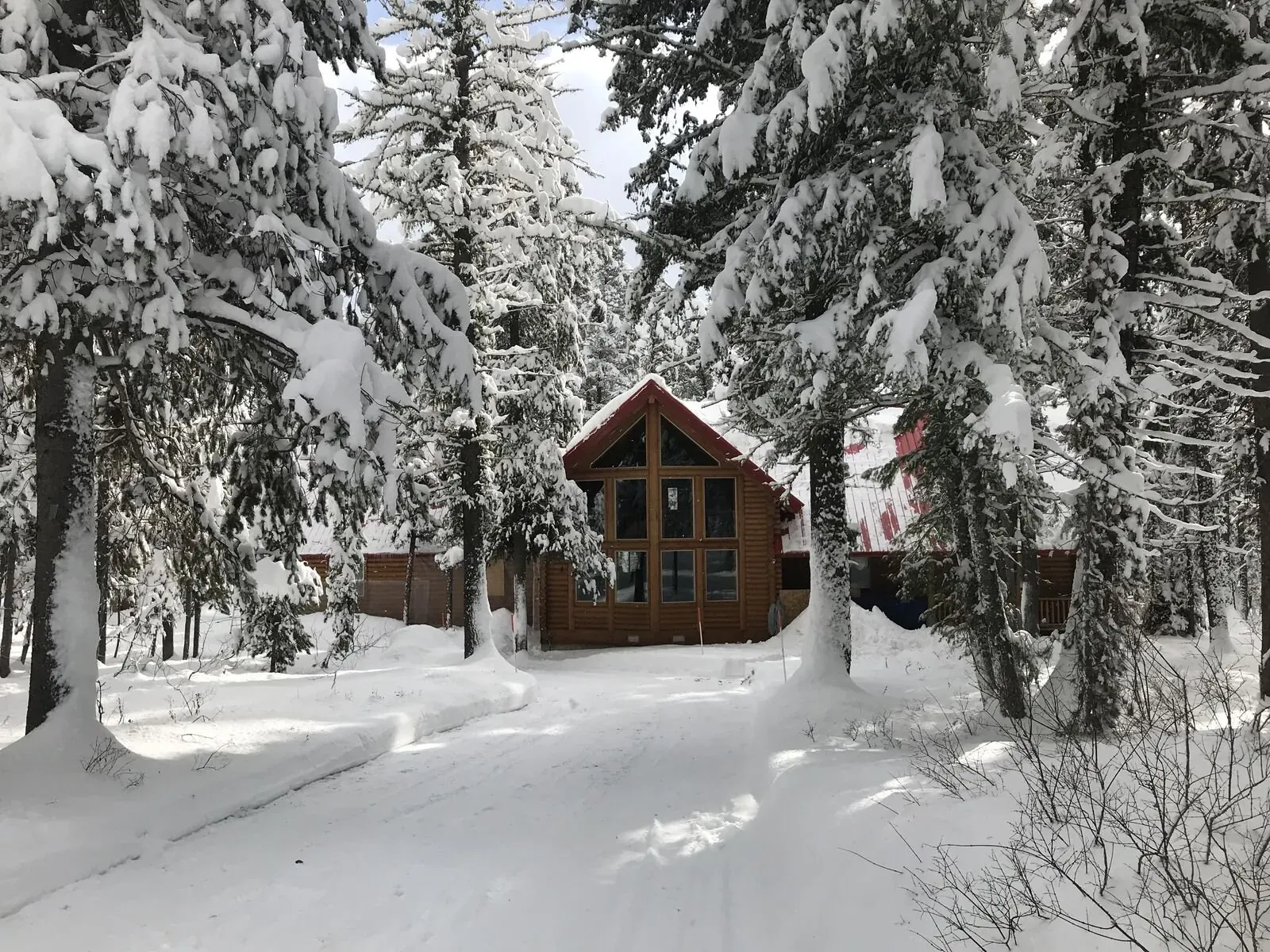
- Sleeps up to 12 — perfect for families or friend groups
- Direct snowmobile trail access — no trailering needed
- Private hot tub surrounded by snow-covered pines
- Full kitchen for après-ski meals
- 30 minutes to Yellowstone's West Entrance
- Fireplace, board games, and cozy common areas for snow days
- Book directly and save up to 10%
Planning Tips for a Winter Trip
🚗 Vehicle
AWD or 4WD strongly recommended. Check road conditions daily via Idaho 511 and Montana DOT. Highway 20 can be icy.
🌡 Temperatures
Expect highs in the teens to low 20s°F and overnight lows from -10°F to -30°F. January and February are the coldest months.
❄ Clothing
Layered system essential. Insulated boots, windproof outer shell, quality gloves, and face protection. Bring hand and toe warmers for snowmobile days.
📅 Best Timing
Late December through February offers peak snow conditions. January provides the best snow ghost formation on Two Top and Lionhead. Book snowcoach tours early.
Winter FAQ
Can you drive into Yellowstone in winter?
Only the road from the North Entrance (Gardiner) to Cooke City stays open to regular vehicles year-round. The West Entrance opens for oversnow vehicles (snowcoach and guided snowmobile) from mid-December through early March.
What are snow ghosts?
Snow ghosts are evergreen trees completely encased in rime ice and frozen snow. Two Top Mountain near West Yellowstone is one of the best places in the world to see them.
Is Island Park a good base for a winter trip?
Yes — it's 30 minutes from the West Entrance, sits at the center of one of the largest groomed snowmobile trail systems in the US, and offers Harriman State Park for Nordic skiing.
Do I need a guide to snowmobile in Yellowstone?
Yes — all snowmobile access inside the park requires a licensed, commercially guided tour. Outside the park, you can ride independently on groomed trails.
How cold does it get?
Very cold. Daytime highs are typically in the teens, with overnight lows from -10°F to -30°F in January and February.
Can I cross-country ski?
Absolutely. Harriman State Park offers 25+ miles of groomed Nordic trails, and Grand Teton's closed Teton Park Road is a popular winter ski route.