The Ultimate Guide to Seeing Bison in Yellowstone
Yellowstone National Park is home to the largest free-roaming bison herd in the United States — roughly 5,000 animals descended from the only wild, continuously free-ranging herd on the continent.
But there's a big difference between spotting a lone bison on the roadside and watching a herd of 200 thunder across Lamar Valley at sunrise. This guide shows you exactly where, when, and how to find the best bison encounters — safely and responsibly.
🦬 Stay at Least 25 Yards Away
Bison are the most dangerous animals in Yellowstone, injuring more visitors than bears, wolves, and elk combined. They can run 35 mph and weigh up to 2,000 lbs. Always stay at least 25 yards (75 feet) away.
Best Bison-Viewing Locations
Bison range across most of Yellowstone, but these locations consistently produce the best sightings:
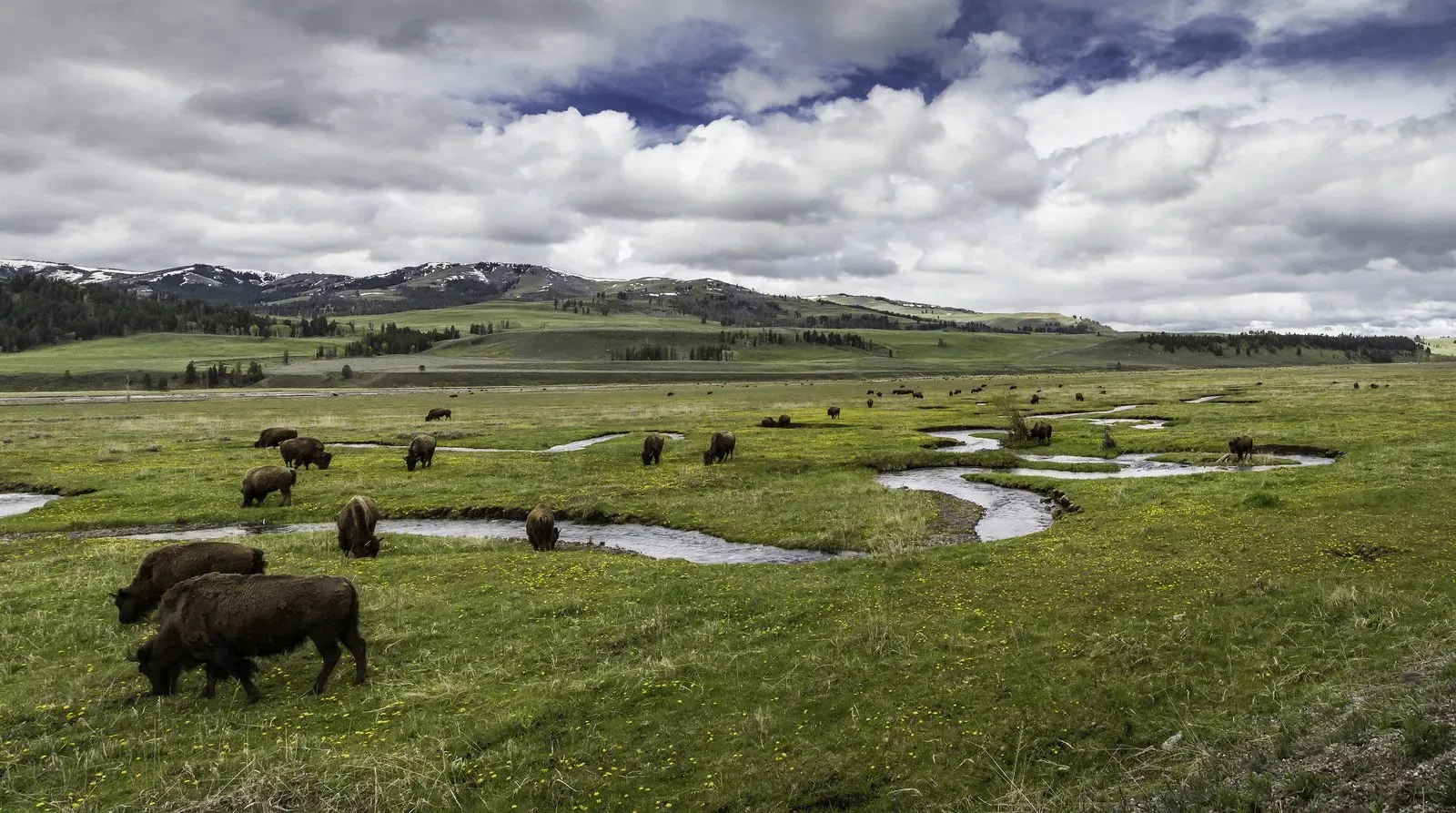
Lamar Valley
Northeast Yellowstone
Best time: Year-round, especially spring & fall
The 'Serengeti of North America.' Largest herds in the park with 100–500+ bison visible.
Hayden Valley
Central Yellowstone
Best time: May–October, peak during July–Aug rut
Bison rut capital — bulls spar, bellow, and wallow here in late July and August.
Madison River Valley
West Yellowstone area
Best time: Year-round
Often the first bison you'll see entering from the West Entrance.
Fountain Flats
Lower Geyser Basin
Best time: Summer
Quieter area south of Madison Junction. Great for photographers.
Old Faithful Area
Upper Geyser Basin
Best time: Late spring & early fall
Bison wander through the geyser basins — surreal with steam eruptions behind them.
Blacktail Deer Plateau
Between Mammoth & Tower
Best time: Spring & fall
Less crowded alternative to Lamar with reliable bison herds.
Seasonal Bison Guide
| Season | Best Locations | What to Expect |
|---|---|---|
| Spring (Apr–May) | Lamar Valley, Madison River | Calving season — newborn "red dogs" appear. |
| Summer (Jun–Aug) | Hayden Valley, Lamar Valley, Fountain Flats | Peak rut in late July–August. Bulls compete and bellow. |
| Fall (Sep–Oct) | Lamar Valley, Blacktail Plateau | Herds begin migrating. Fewer crowds, golden light. |
| Winter (Nov–Mar) | Lamar Valley, Madison River, geyser basins | Bison gather near thermal areas. Frosted fur, steaming breath. |
Bison Behavior & Safety
Reading Bison Body Language
- Tail raised = agitated or about to charge. Back away immediately.
- Pawing the ground = warning behavior. Give more space.
- Head lowered and turned toward you = threat posture.
- Grazing with tail relaxed = calm. Safe to observe from 25+ yards.
Safety Rules
- Stay at least 25 yards from bison at all times
- Never approach bison for a photo — use a telephoto lens
- Don't block bison on roads — turn off your engine and let them pass
- Never get between a mother and calf
- Bison can run 35 mph — you cannot outrun one
Bison Photography Tips
- Best light: First and last hour of daylight
- Lens: 200–400mm telephoto for safe distance
- Include the landscape — bison against valleys, rivers, and steam
- Rut action: Bulls sparring and dust-wallowing make dramatic shots
- Vehicle as blind: Shoot from your window for calm encounters
Sample Bison Day Trip Plan
From Island Park (via West Entrance)
- 5:30 AM — Leave Island Park, enter West Entrance at 6:00 AM
- 6:30 AM — Madison River Valley: scan for bison along the river
- 7:30 AM — Drive to Hayden Valley
- 9:00 AM — Continue to Lamar Valley for the largest herds
- 11:00 AM — Explore Tower-Roosevelt area
- 1:00 PM — Return via Canyon Village, stop at Fountain Flats
- 3:00 PM — Exit West Entrance and return to Island Park
🏠 Stay at Lodgepole Pines Retreat
Our cabin sleeps up to 12 guests, just 30 minutes from the West Entrance. Check availability →
Frequently Asked Questions
Where is the best place to see bison in Yellowstone?
Lamar Valley and Hayden Valley are the two most reliable locations year-round.
How close can you get to bison in Yellowstone?
You must stay at least 25 yards (75 feet) from bison at all times.
What time of day are bison most active?
Early morning and late evening. Bison graze during cooler hours.
When is the Yellowstone bison rut?
Late July through August. Bulls compete with head-butting and bellowing.